In our recent exploration of the Modern Sarang-bang, we discussed the power of the “One Object” rule. But what deserves to grace your Breathing Walls?
Today, we introduce Bojagi—the ancient Korean art of patchwork textiles. Often called “the Mondrian of the East,” these hand-stitched masterpieces are more than just decor; they are a statement of sustainable luxury. Join 404+ global readers in discovering the ultimate “Tactile Art.”
1. The Geometry of Heritage: Beyond Painting
Unlike a heavy oil painting, a framed Bojagi brings a sense of airy sophistication. Its hand-stitched lines create a geometric rhythm that pairs perfectly with the minimalist architecture of a K-Zen Home.
- Curator’s Choice: Opt for semi-transparent silk fabrics (Ramie or Ok-sa) to create a “Light Play” that changes throughout the day.
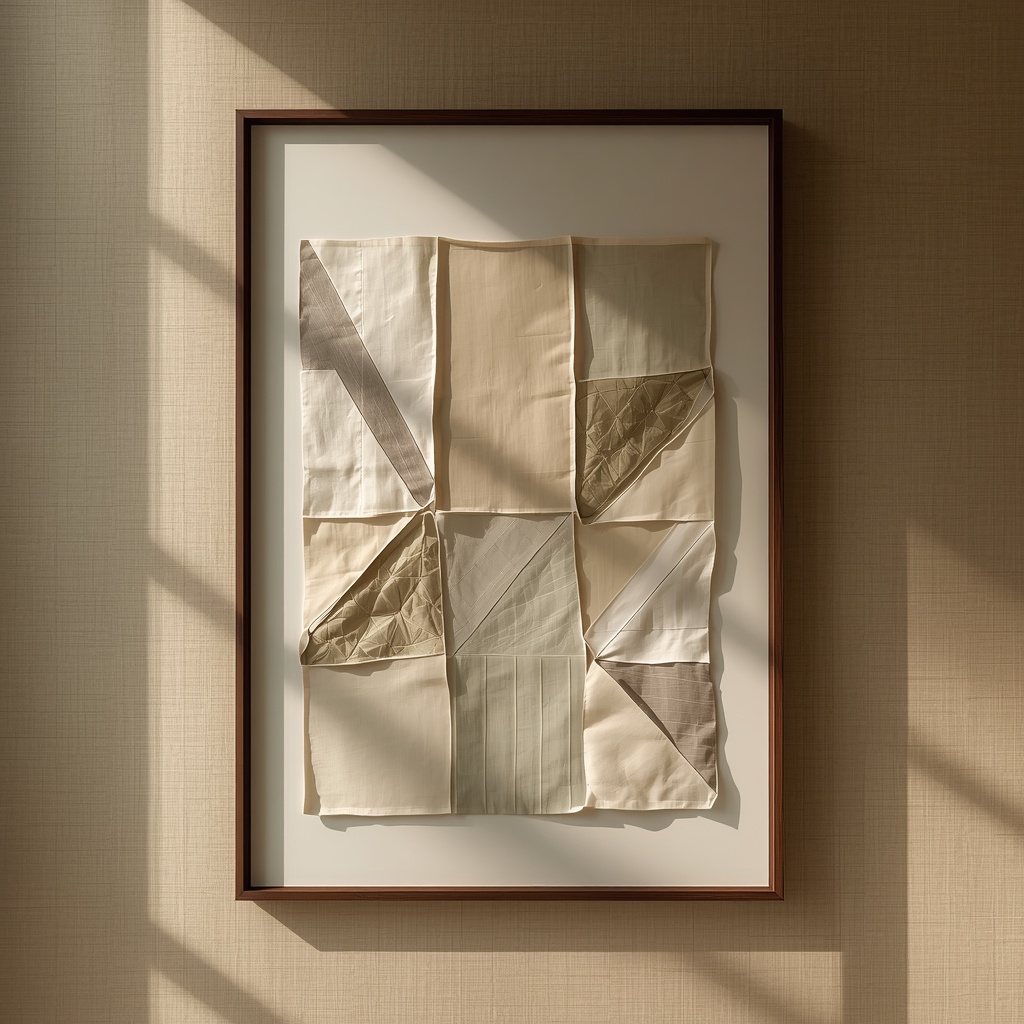
2. Sustainable Luxury: Art with a Soul
In an era of mass production, Bojagi stands as a testament to the “Art of the Patchwork.” Historically made from recycled fabric scraps, it represents a high-end approach to sustainability. It carries a “Warmth” (On-gi) that mirrors the soul of our Elegant Korean Ceramics.
3. Layering the Narrative: Texture on Texture
The true magic happens when you hang a silk Bojagi against a Hanji Wall. The interplay between the fibrous paper and the translucent silk creates a sophisticated “Tactile Layering” that defines the modern K-Minimalist aesthetic.
💡 Styling Tip for Collectors:
Treat your Bojagi as a light filter. If you have a window in your office or meditation room, consider hanging a large, un-framed piece. Watch as the sun transforms the fabric into a living mosaic of colors, much like the changing seasons in your K-Zen Backyard.
Do you prefer the bold lines of modern art or the hand-stitched story of heritage textiles? Share your curatorial vision in the comments below.
Leave a Reply