If you have already curated your Grand Entryway, you are ready to embrace the ultimate philosophy of K-Minimalism: Hanok.
Traditional Korean architecture isn’t just about the past; it’s about a lifestyle that prioritizes “The Path of Wind” and “The Light of Nature.” For our 427+ global readers, we explore how to bring the soul of a Hanok into a modern US luxury estate.
1. The Soul of the Ceiling: Exposed Timber Beams (Seok-rae)
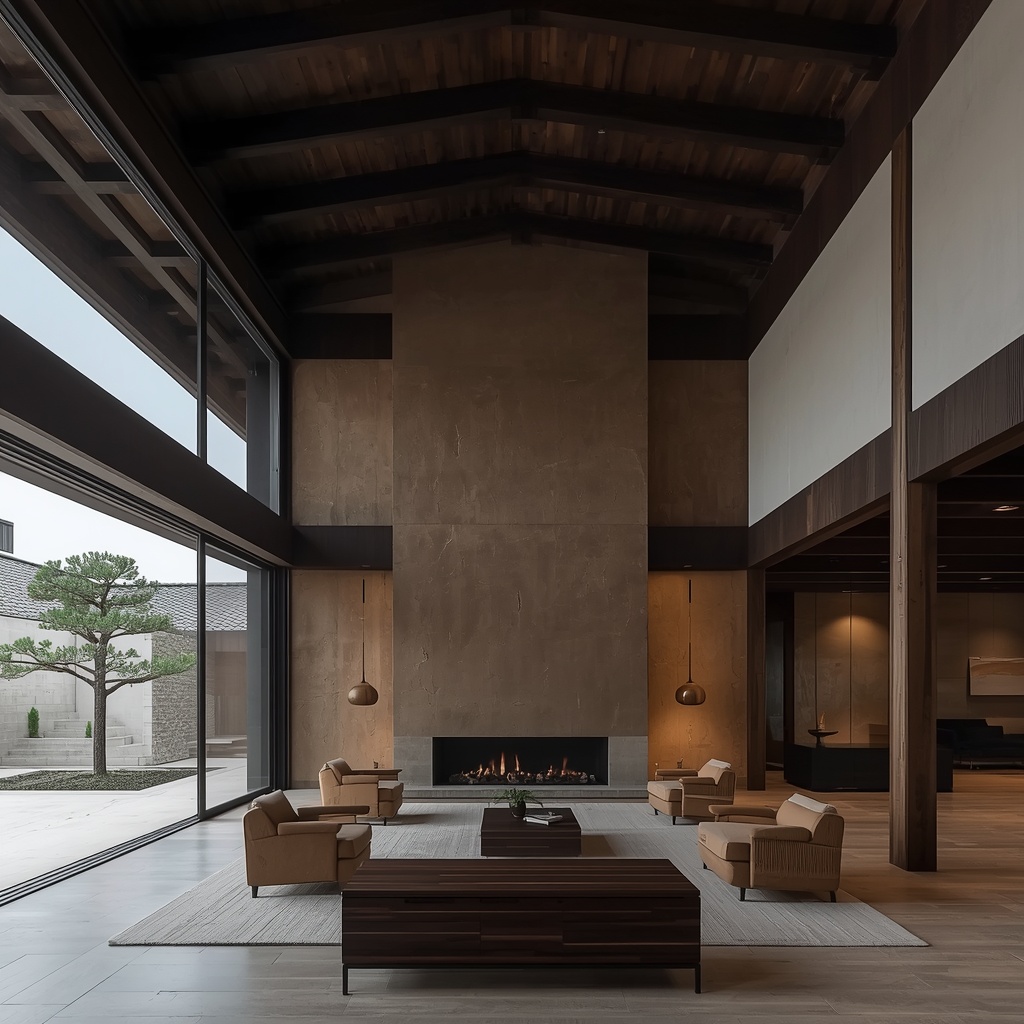
The defining feature of a K-Zen Home is the dialogue between wood and space. By exposing dark timber beams in a high-ceiling living room, you create a rhythmic, structural beauty that mirrors the honesty of nature. It provides a visual weight that grounds your home, much like a Seokdeung grounds your garden.
2. The Internal Courtyard: Bringing the “Outside In”
A true Modern Hanok is built around the Madang (Central Courtyard). Incorporating a private glass-walled garden in the center of your floor plan creates a private sanctuary. This “Borrowed Scenery” acts as a living mural, changing with the seasons—the pinnacle of the Architecture of Peace.
3. Material Harmony: Clay, Wood, and Glass
Contrast is the language of luxury. Pairing raw, textured Breathing Clay Walls with sleek, oversized glass panes creates a sophisticated “Organic Modernism.” It’s a space where ancient thermal wisdom meets contemporary aesthetics, offering a level of comfort that synthetic materials can never achieve.
💡 Architectural Note:
When designing a Modern Hanok space, let the shadows do the work. Use indirect cove lighting to accentuate the wood grains of the beams. This “Shadow Play” is the same principle we use when styling Bojagi Art—it’s about the depth that light creates when it hits a curated surface.
Does your home feel like a box, or does it breathe? Let’s discuss the future of Zen architecture in the comments below.
Leave a Reply