Introduction: The Night I Found Silence in a Bordeaux Cellar
Years ago, while navigating a high-stakes textile 소싱 contract across Europe, I found myself standing inside a centuries-old underground vault in Bordeaux. I was exhausted, chasing data metrics, and running on severe corporate fatigue. The cellar director handed me a vintage red in a hand-hammered vessel, and as I sat in that damp, silent dark surrounded by raw earth and ancient timber, my pulse finally slowed down. It wasn’t just about the wine; it was about the architecture of fermentation—the profound luxury of a room that knows how to breathe.
In contemporary American luxury estates, modern wine cellars have unfortunately transformed into loud, over-engineered neon trophy cases—flooded with high-gloss chrome racks, blinding surgical white LED strips, and sterile commercial glass walls. While these multi-million dollar glass boxes project sharp financial domination, they fundamentally violate the sensory insulation required to appreciate fine aging. True wealth doesn’t put its legacy behind a cold neon storefront.
Today, MARU redefines the private sanctuary. We introduce the design philosophy of the bespoke K-Zen Wine Cellar—an elite subterranean vault where the structural honesty of deep timber, the acoustic insulation of raw clay, and the ancient breathing micro-climate of Korean Ongki (Earthenware) converge to craft a sacred gallery of slow living. Join 536+ discerning global leaders who are reclaiming structural silence at the base of their homes.
1. The Intermediate Horizon: Grounding the Vault with Low-Profile Timber Racks
The primary architectural flaw of standard modern wine cellars is their aggressive verticality. Towering, industrial metal grids floor-to-ceiling force your eyes to constantly scan upward, triggering an unconscious visual hustle that mimics a retail commercial environment. Genuine K-Zen Minimalism rejects this visual chaos, prioritizing a lower, horizontal plane that allows the gaze to rest.
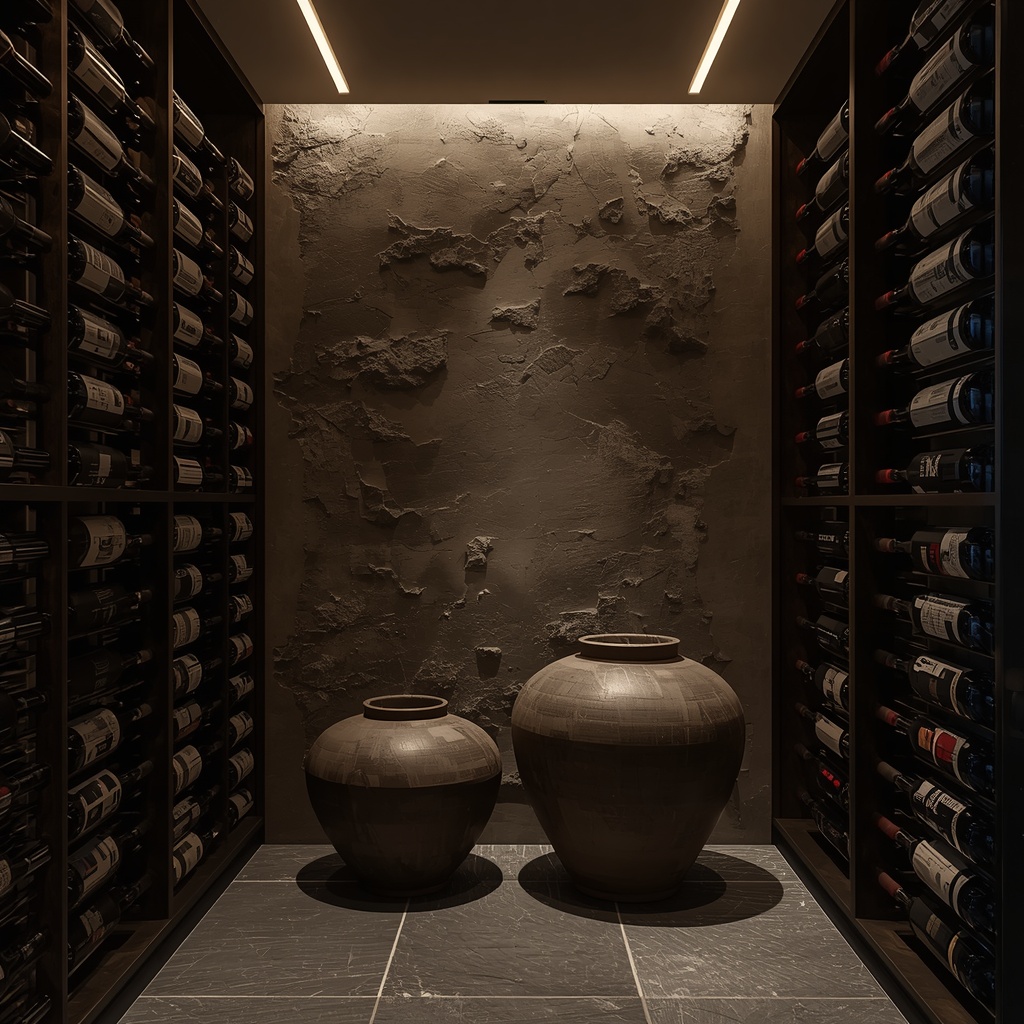
For a premium penthouse or estate vault, we interpret this heritage by installing custom-built, low-profile wine cradles crafted from solid, charred oak or dark walnut with a matte, oil-rubbed finish. By keeping the main selection at a comfortable chest horizon and leaving a monumental volume of Yeo-baek (Empty Space) on the upper stone feature walls, you instantly alleviate cognitive load.
The rich, deep wood grain introduces an organic tactile warmth that absorbs structural vibration, establishing a protective cocoon for your finest vintages. This linear structural geometry perfectly mirrors the serene spatial balance we engineered within our Restful Elegance Platform Bedroom.
2. The Micro-Climate of Clay: Introducing the Breathing Ongki Principle
A high-end sanctuary for fermentation cannot exist surrounded by synthetic, non-porous glass and drywall that bounce sound waves and dry out the micro-atmosphere. Fine wine requires an environment with material integrity. To achieve this, the modern MARU standard introduces a revolutionary structural contrast: the integration of traditional Ongki earthenware vessels.
Ongki, hand-patted from iron-rich clay and coated with natural leaf-ash glazes, is known in ancient Korean culture as the “breathing pottery.” Its microscopic pores naturally regulate temperature, humidity, and airflow.
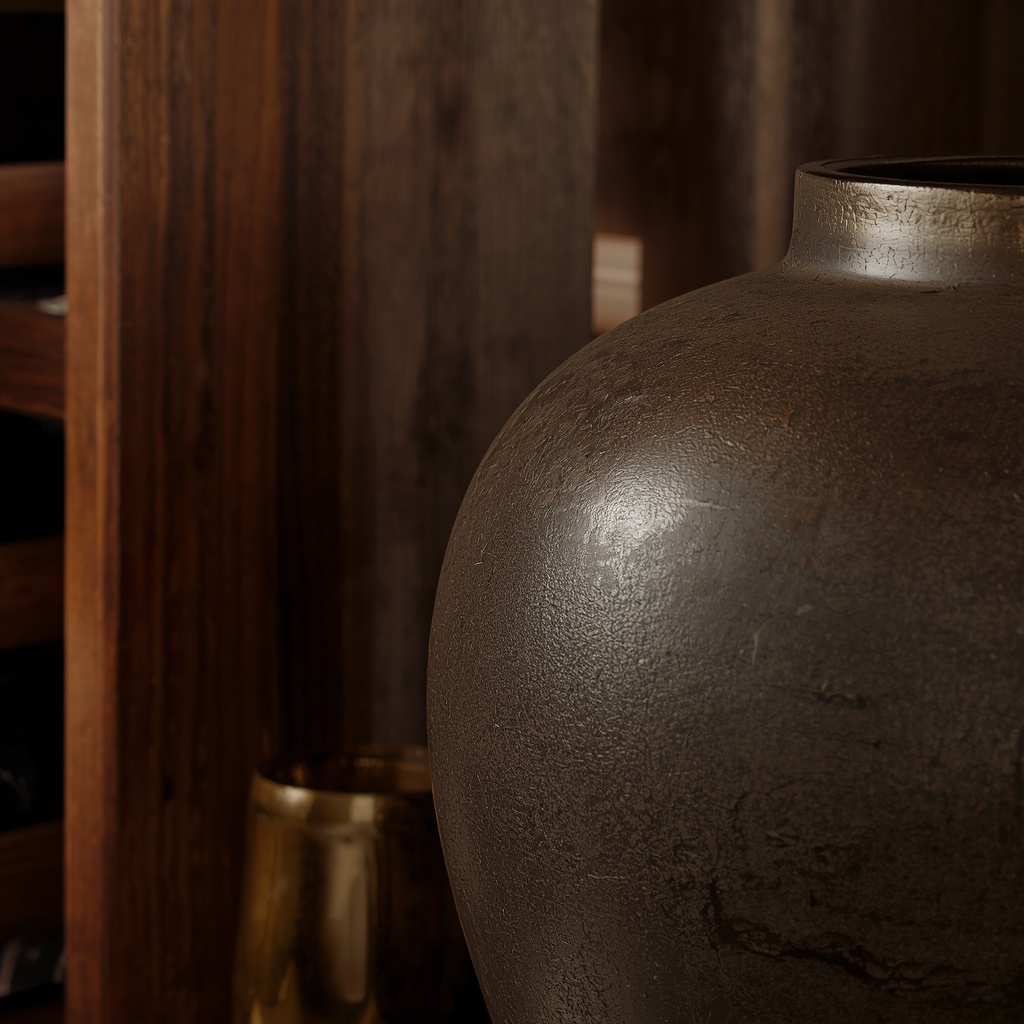
In an elite modern wine vault, place two large, structural antique Ongki jars at the corners of your dark timber racks. The coarse, rough, hand-textured surface of the dark clay jars acts as a majestic counterweight to the sharp precision of modern wine bottles. This pairing creates a stunning museum-quality tablescape layout. To further deepen the sensory texture of the space, rest a pale white porcelain bowl from our Elegant Ceramic Collection on an adjacent low side cabinet, allowing the smooth glaze to bounce off the rough clay skin of the vault.
3. The Shadow Horizon: Micro-Lighting and Subterranean Scenery
Blinding, aggressive overhead spotlights from commercial tracking fixtures completely destroy the neurological path to decompression, while actively damaging the chemical structure of aging wine. To protect both the vintage and the nervous system of the collector, cellar lighting must embrace the low-set, amber horizons celebrated in Modern Seoul Style masterworks.
Conceal warm, high-CRI, ultra-low voltage LED tracks behind the floating baselines of the wooden wine racks and under raw stone seating blocks. The light should graze horizontally across the raw slate tiles, casting long, dramatic, and elegant shadows up the hand-textured clay feature walls. Task illumination is delivered strictly through focused, low-intensity beams that light only the pouring table.
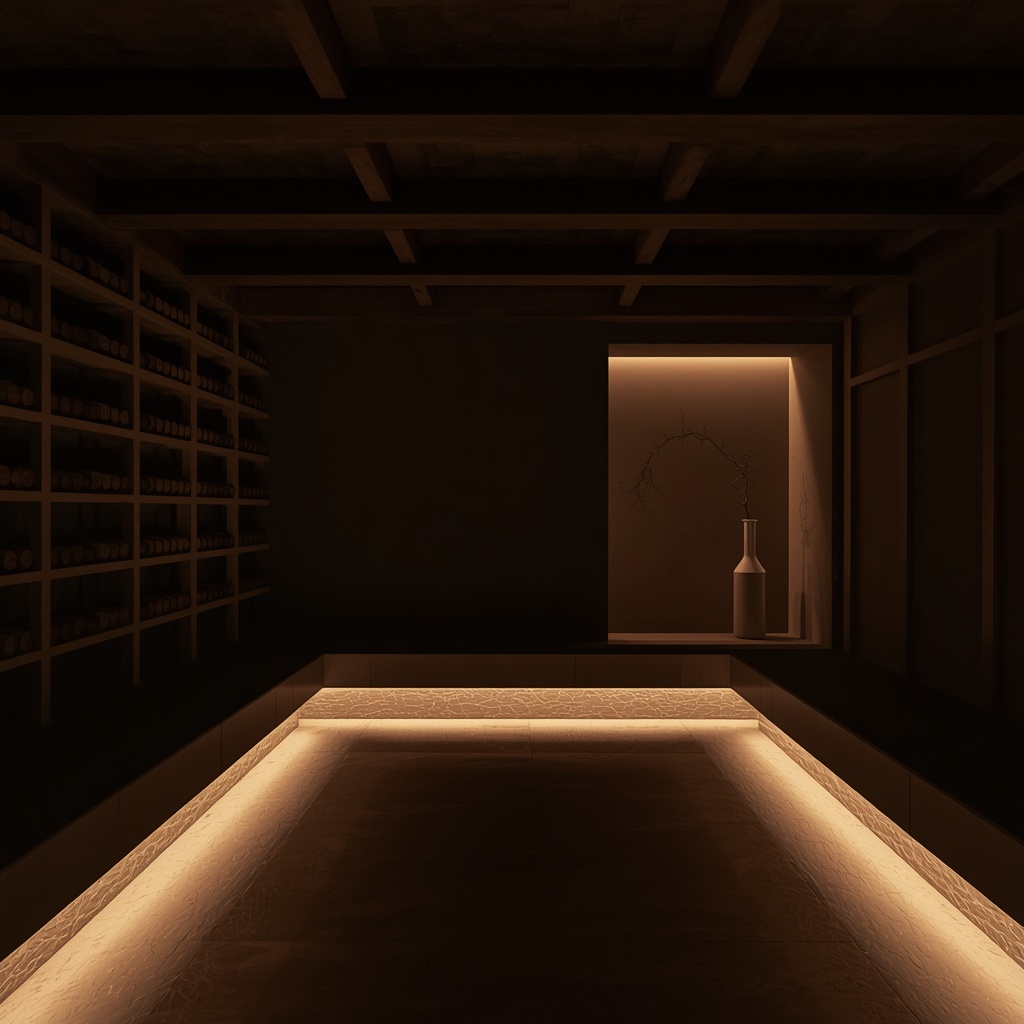
Furthermore, by utilizing a single floor-to-ceiling glass panel horizon on one side, practice Chak-kyeong (Borrowed Scenery). Your tasting gaze is directed outward into a private, underground gravel patio where a solitary, weathered Outdoor Seokdeung (Stone Lantern) glows softly in the dark. It creates an expansive, meditative flow that perfectly mirrors the infinite relaxation path of our Luxury K-Zen Spa Sanctuary.
4. Curating the Pour: Enforcing the MARU Standard of Sensory Discipline
The final metric of an elite wine cellar is its sensory discipline. Standard luxury tasting rooms are frequently ruined by chaotic displays of modern plastic corkscrews, modern electronics, and cluttered glassware racks that overstimulate the optical nerve. MARU demands an absolute vacuum of clutter.
Conceal all temperature-control mechanisms and electrical hardware behind clean, hidden pocket doors wrapped in Hanji Paper Finishes. The stone tasting ledge should hold only your crystal glassware, a set of Premium Hand-Forged Yugi Bronzeware Bowls for organic snacks, and a singular Bespoke Stone Incense Burner on a low plinth. Before your inner circle descends, light a single stick of sandalwood, letting the thin wisp of white smoke purify the subterranean air.
This strict isolation ensures that the focus remains entirely on the aromatic story of the vintage, the material truth of the clay, and the souls of the people sharing the glass. It transitions your cellar from a mere utility storage into a magnificent temple of daily rejuvenation, matching the holistic architectural balance of a grand Contemporary Hanok Estate.
Conclusion: Investing in Legacy and Quiet Sovereignty
In the furious momentum of modern high-finance and global real estate, the ultimate commodity is no longer more speed—it is the absolute authority to slow down time. A private wine vault engineered with traditional Korean Zen minimalism is a profound spatial instrument designed for that precise sovereignty.
By lowering the profile of your cradles, honoring the breathing micro-climate of earthenware Ongki, and mastering the subterranean shadows, you transform your basement from a loud utility showcase into a profound sanctuary of deep emotional restoration. It is a nightly visual declaration that true power does not flash its credentials—it waits patiently in the dark, commanding respect through absolute silence.
Would you dismantle your high-gloss neon glass wine case for a grounded, clay-insulated K-zen vault designed for deep cognitive restoration? Let’s curate your subterranean sanctuary together in the comments below.
Leave a Reply