Introduction: The Architecture of Deep Focus
If you have already grounded your resting soul with our Restful Elegance Platform Bed, you are ready to conquer the space where strategy is born. In the grand estates of the West, the executive home office is often a loud proclamation of power—dominated by towering leather executive chairs, massive mahogany desks, and heavy, light-blocking drapes. While these spaces project historical corporate dominance, they often fail to provide what the modern leader truly requires: mental clarity and spatial serenity.
Today, MARU redefines the working environment for the global elite. We introduce the philosophy of the traditional Korean Sarang-bang (The Scholar’s Room)—a space designed around the principles of intellectual discipline, visual restraint, and spatial harmony. Join 465+ discerning global readers who are shifting from corporate noise to curated stillness, transforming their workspaces into sanctuaries of deep focus.
1. The Low-Profile Anchor: The Power of the Floating Scholar’s Desk
The core of any executive study is the desk. However, to achieve the ultimate K-Zen Minimalism, we must reject the industrial scale of contemporary office furniture. In the traditional Sarang-bang, the scholar worked on a low wooden desk (Banyuk), maintaining a physical proximity to the earth that fostered grounded thought.
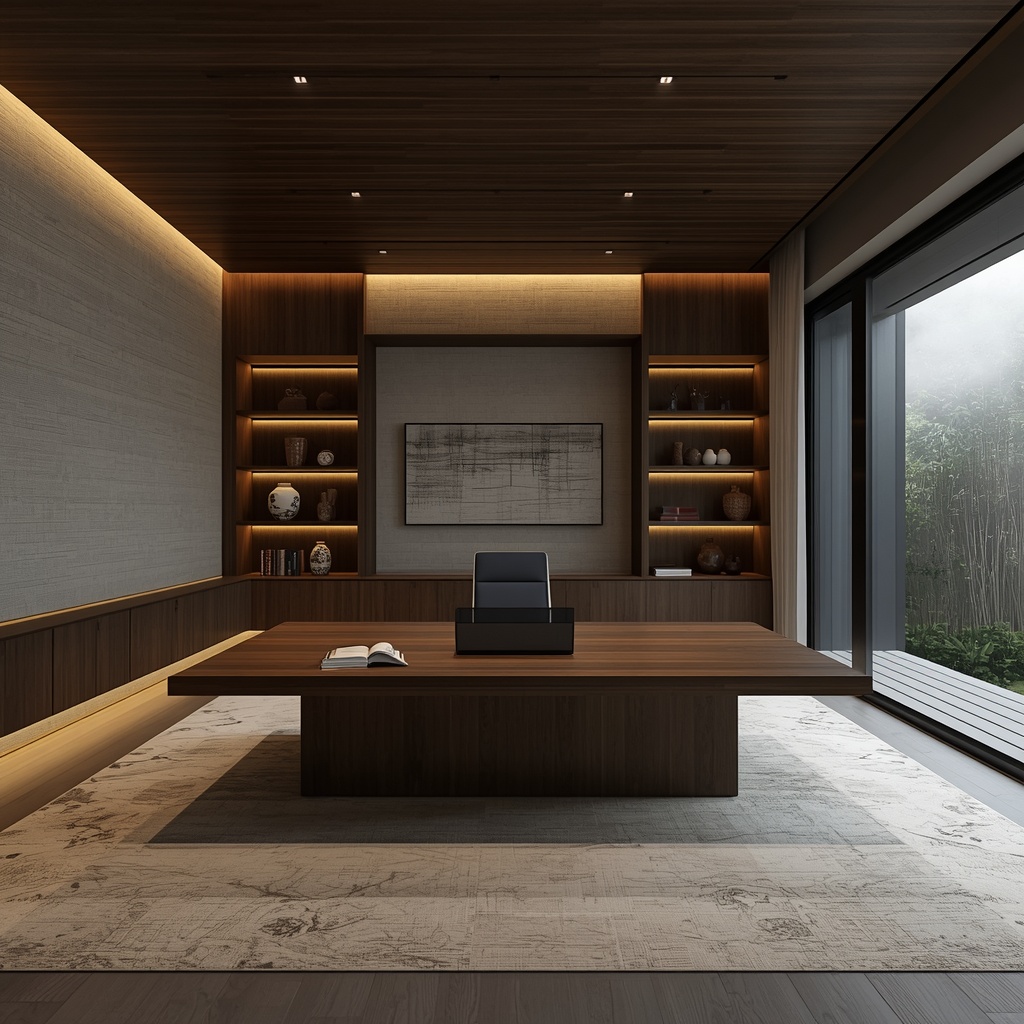
For a modern luxury estate, we interpret this heritage through a massive, custom-built floating desk crafted from solid, dark-charcoal oak or walnut. By eliminating bulky drawers and thick metal legs, the desk appears suspended in mid-air. This design introduces a vast amount of Yeo-baek (Empty Space) beneath the furniture, allowing the eyes and mind to breathe.
When your workspace is stripped of visual clutter, your cognitive load decreases. The heavy wood timber provides a rich, tactile warmth that grounds the room, acting as a structural centerpiece that anchors your thoughts. This spatial liberation is the same principle we utilized in our Grand Entryway Guide—it is about creating an immediate sense of arrival and purpose.
2. Structural Restraint: The Dialogue of Bookshelves and Empty Space
A luxury home office requires storage, but standard Western bookshelves often create a chaotic wall of visual noise. The Sarang-bang philosophy approaches storage with a strict discipline of restraint. Books and objects are not merely stored; they are curated.
The modern MARU standard utilizes low-profile, open-backed wooden shelving units that sit lower than eye level. Instead of packing every shelf with documents, we implement the rule of “One Object.” A single shelf might hold a few meticulously bound volumes, while the adjacent space is left entirely empty, exposing the raw mulberry fibers of your Breathing Hanji Walls.
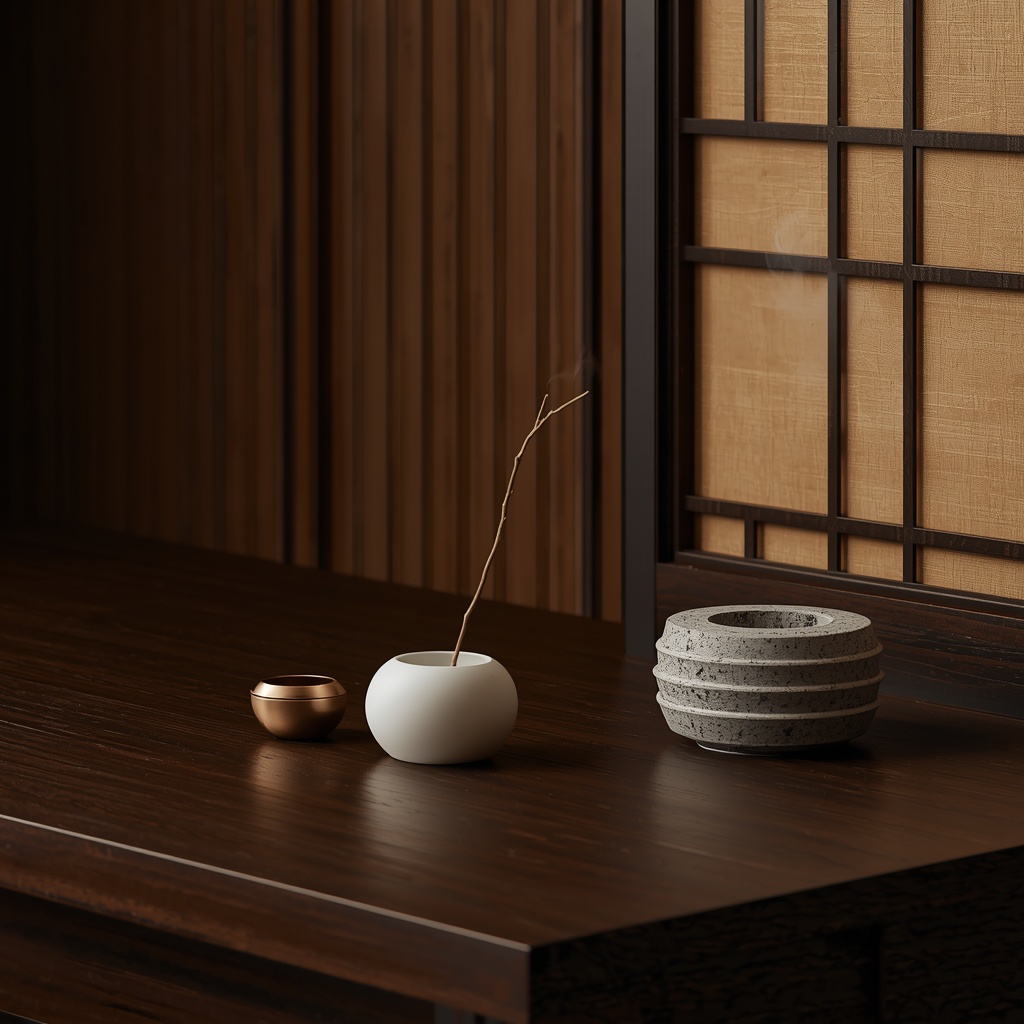
This deliberate placement allows for a sophisticated dialogue between the structural lines of the wood and the organic texture of the wallpaper. On a focal shelf, placing a single white porcelain vessel from our Elegant Korean Ceramics collection creates a visual anchor that rests the eyes during intense strategic sessions. It transforms a functional utility wall into a museum-quality living mural.
3. The Shadow Horizon: Micro-Lighting for Intellectual Clarity
Lighting in an executive study must balance functional task precision with emotional serenity. Harsh overhead commercial LEDs destroy the contemplative atmosphere required for high-level decision-making. We must look to the light play found in Modern Seoul Style estates, where light is indirect and low-set.
By integrating warm, concealed LED strips beneath the edge of the floating desk and inside the lower shelves, you create a soft “Shadow Horizon.” The light grazes the floor and washes over the natural textures of a hemp rug, keeping the direct glare completely hidden from the working eye. For task lighting, a singular, architectural desk lamp with a high CRI values is all that is required.
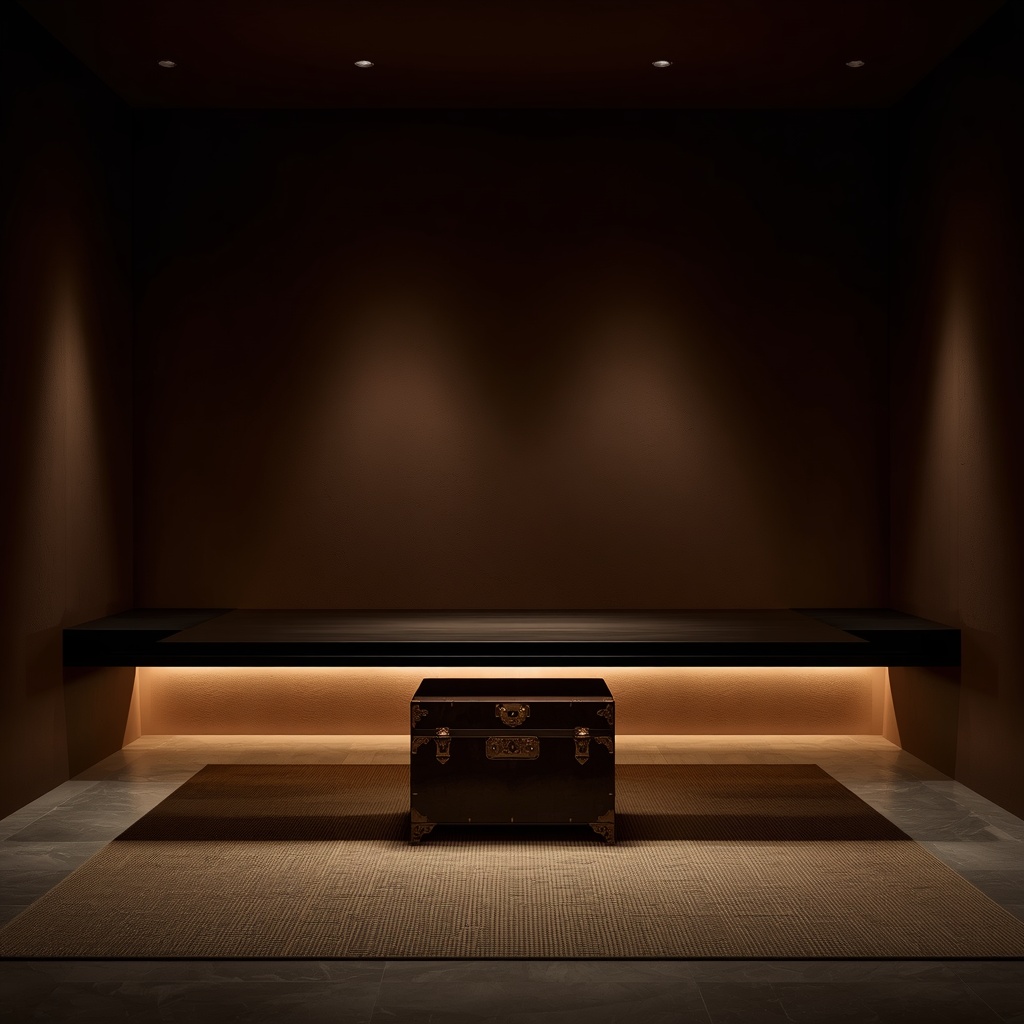
This intentional contrast between deep shadows and warm illumination creates a dramatic, meditative focus. It mirrors the soothing atmosphere of the Modern K-Zen Spa, keeping your nervous system calm even during the most demanding hours of the night. The room becomes a psychological shield, insulating your mind from external chaos.
4. Curating the Deskterior: The MARU Standard of Desktop Elements
How you populate the surface of your floating desk is the ultimate reflection of your curatorial discipline. The modern executive desktop is usually littered with screens, wires, and plastic organizers. MARU demands a return to raw, natural materials that satisfy both tactile and visual senses.
Keep digital hardware to an absolute minimum. In corporate hours, your focus should be framed by heritage. Place a Bespoke Stone Incense Burner on the corner of the desk. The slow, rhythmic rising of sandalwood smoke acts as a visual metronome, pacing your breath and thoughts. On the opposite side, replace industrial plastic trays with a small, hand-carved wooden box or a minimalist ceramic tray to hold your writing instruments.
This meticulous pairing of textures—cold stone, dark wood, and smooth porcelain—creates a sophisticated ecosystem of peace. It ensures your workspace is not merely a production line, but a curated legacy that complements the holistic philosophy of a grand Modern Hanok Estate.
Conclusion: Elevating Strategy Through Silence
In the relentless pursuit of corporate scaling, the modern leader often forgets that the greatest strategic advantage is clarity. A home office designed with Korean Zen principles is not an aesthetic luxury; it is a cognitive necessity.
By lowering the profile of your furniture, honoring the empty space, and commanding the shadows, you create an environment where the mind can truly expand. It is a daily reminder that true power does not roar—it commands through absolute silence.
Would you dismantle your traditional corporate executive suite for a low-profile, floating sanctuary of deep focus? Let’s curate your intellectual space in the comments below.
Leave a Reply