Introduction: The Architecture of Conviviality
If you have already curated the ultimate sanctuary of deep focus with our Scholar’s Study Guide and grounded your nights with the Restful Elegance Platform Bed, you are ready to master the most social domain of the luxury estate: the dining room. In contemporary Western architectural design, high-end dining spaces are frequently built on industrial scale—defined by cold marble monoliths, glittering crystal chandeliers, and sterile stainless steel accents. While these materials project financial dominance and sharp precision, they often lack what the modern global leader truly requires when hosting inner circles: an emotional anchor, material warmth, and spatial conversational clarity.
Today, MARU redefines the hospitality environment for the elite. We introduce the design philosophy of the modern Hanok Dining Room—a space where structural honesty, organic textures, and the ritual of gathering converge to turn a meal into a sacred ceremony. Join 510+ discerning global readers who are dismantling corporate coldness to embrace curated stillness at the culinary stage.
1. Structural Harmony: The Exposed Timber Canopy and Spatial Rhythm
The foundational blueprint of an authentic K-Zen Home dining pavilion lies in its overhead architecture. In traditional Korean design, the roof structure is never concealed behind drywall; instead, the wooden rafters (Seorae) and massive structural beams (Do-ri) are left exposed, creating a rhythmic timber canopy that defines the spatial volume of the room.
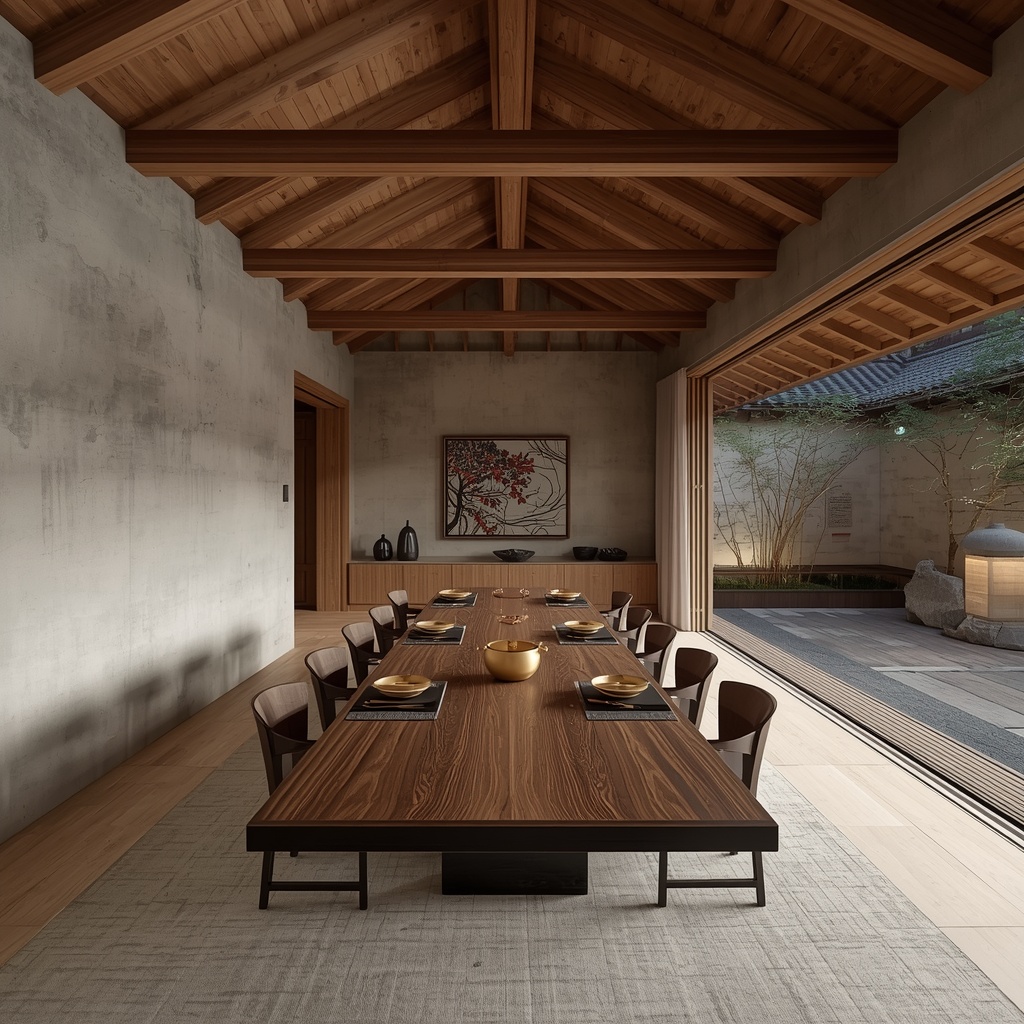
For a modern high-end estate, we interpret this heritage by integrating clean, geometric structural oak or walnut beams across a vaulted white plaster ceiling. This design choice instantly draws the eyes upward, introducing a dramatic sense of architectural depth without relying on a loud, glittering chandelier. The exposed timber provides an immediate organic scale and acoustic dampening, creating an intimate soundscape where conversations flow effortlessly without echo.
This timber rhythm acts as a heavy visual frame that beautifully anchors a massive, custom-built 10-foot dining table below. Crafted from slow-grown solid walnut with raw, soft-chamfered edges, the table layout mirrors the minimalist linear philosophy of our Modern K-Zen Home Bar. It is a structural statement that transitions the dining room from a mere eating area into a grand hall of legacy.
2. The Dialogue of Luster: Modern Tablescapes Meet Golden Yugi
A luxury dining environment is fundamentally defined by the tactile elements that touch the hands and lips of your guests. While standard modern design defaults to heavy silver or polished porcelain, the MARU standard demands a deeper narrative of craftsmanship and wellness through the implementation of The Golden Standard: Korean Yugi Bronzeware.
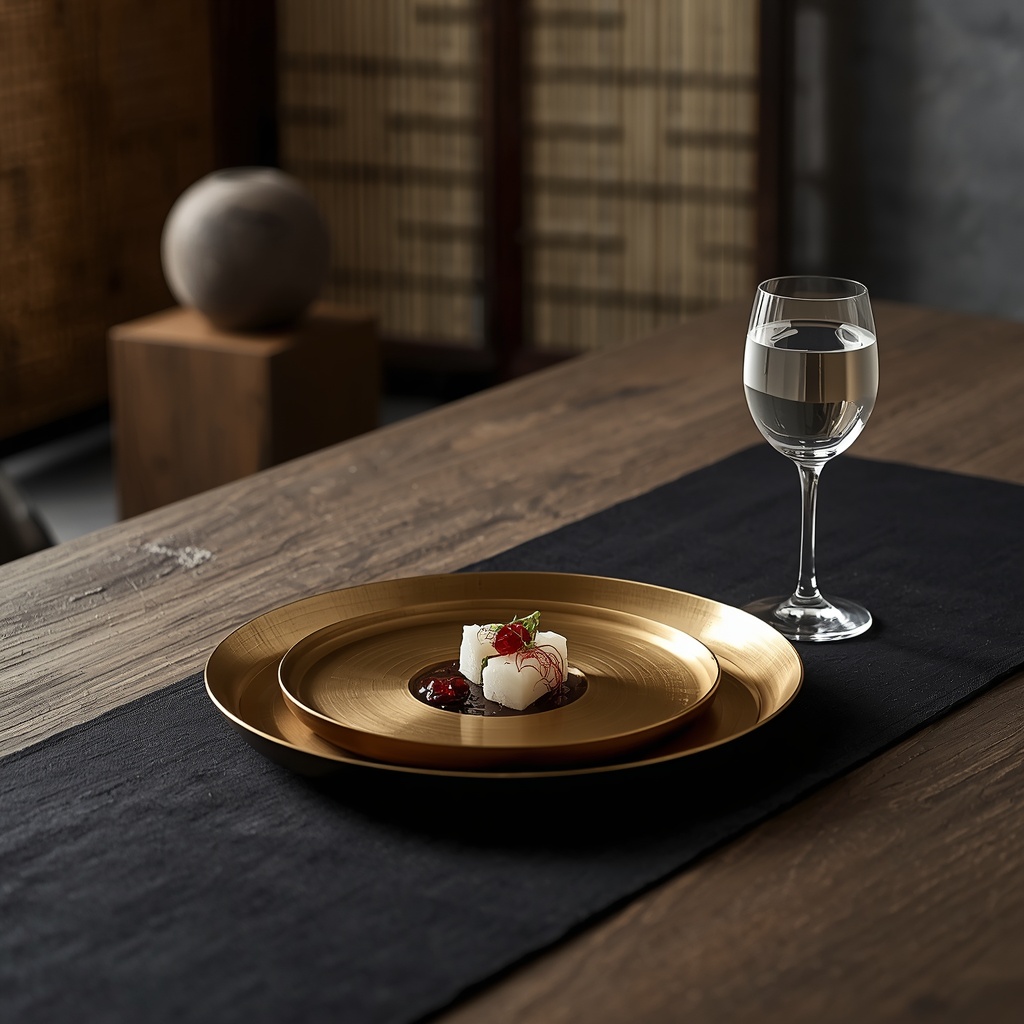
When planning an elite tablescape, place hand-forged matte Yugi plates on a deep black oak or raw slate table runner. The satin, muted golden patina of the bronze acts as a living sculptural contrast against the dark, porous wood grains. To keep the design grounded in 21st-century modernism, pair these ancient vessels with ultra-sleek, minimalist crystal wine stems and clean linen napkins.
This interplay of textures—the cold precision of crystal interacting with the hand-hammered warmth of royal bronze—creates a sophisticated sensory harmony. Furthermore, as highlighted in our primary Yugi Material Guide, the self-sanitizing properties of this copper-tin alloy bring a vital narrative of wellness to the feast, ensuring that your hospitality is backed by material integrity. It is the culinary equivalent of placing an Elegant Moon Jar in your foyer: a deliberate selection that commands admiration through quiet elegance.
3. Borrowed Scenery: Blurring Boundaries via Glass Horizons
In traditional Hanok architecture, a room is never isolated from nature. Through the genius design framework known as Chak-kyeong (Borrowed Scenery), windows and open doors are strategically placed to frame the external landscape as a living, dynamic painting. In a luxury modern dining suite, this principle is crucial for establishing an atmosphere of infinite expansion.
Replace solid masonry walls on one side of the dining room with high-end, floor-to-ceiling minimal glass sliding horizons. These glass panels should open directly into a private interior courtyard or a misty bamboo garden. By doing so, you blur the boundary between the internal warmth of the timber canopy and the external stillness of nature.
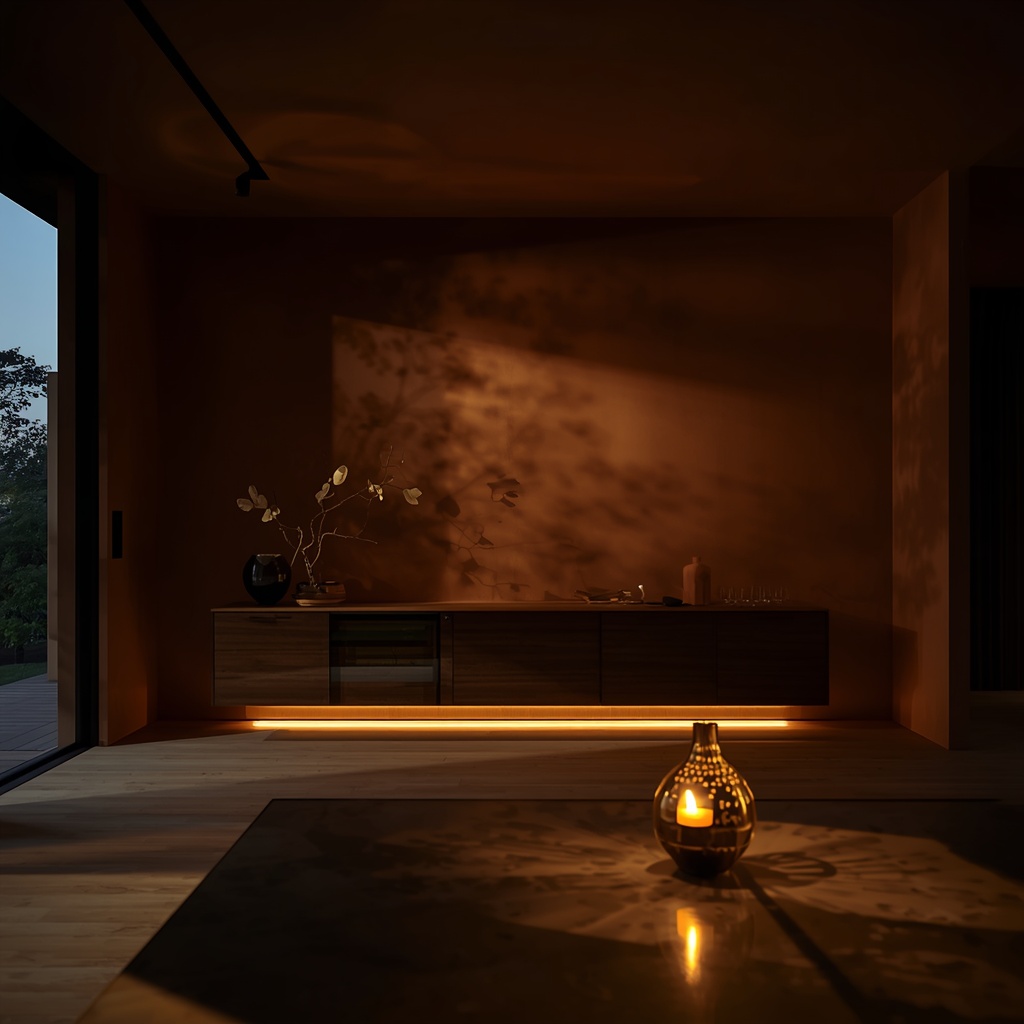
During evening banquets, integrate warm, low-level indirect LED lighting along the base of the courtyard garden, softly illuminating a stone sentinel or a traditional Outdoor Seokdeung. This low-set light horizon mimics the subtle shadow play we utilize in the Master Bedroom Suite. It naturally lowers the heart rate of your guests, inviting them into a state of meditative slow-living where time ceases to dictate the rhythm of the evening.
4. The Empty Center: The Art of Yeo-baek in Hospitality
The final, and most vital, discipline of styling a grand K-Zen dining space is honoring the philosophy of Yeo-baek (Empty Space). Modern Western dining spaces often suffer from over-decoration—crowded with heavy buffets, ornate sideboards, and excessive floral arrangements that choke the room’s energy.
The modern MARU standard requires absolute restraint. The perimeter of the dining hall should remain entirely liberated. Instead of bulky cabinets, place a singular, low-profile antique chest like a Heritage Bandaji against a hand-textured Hanji Wallpaper Wall. Leave the wall above the chest empty, allowing the natural, fibrous texture of the mulberry paper and the subtle grazing shadows to be the artwork.
This “Intentional Isolation” ensures that the focus remains entirely on the structural form of the table, the luster of the vessels, and the souls of the people gathered around them. The room ceases to be a display cabinet of raw wealth; it transforms into a curated temple of connection, complementing the holistic design ethos of a magnificent Modern Hanok Estate.
Conclusion: Redefining Luxury Through the Feast
In the hyper-accelerated cadence of modern society, the ultimate power is the ability to slow down time for those we invite into our homes. A dining room designed with modern Hanok principles is a sophisticated engine for this precise luxury.
By exposing the structural truth of timber, honoring the golden luster of heritage metals, and borrowing the calm scenery of the earth, you create a space where hospitality becomes art. It is a tangible proclamation that the greatest feast is not merely the food served, but the deep, architectural silence and connection shared.
Would you trade the cold marble surfaces of a Western dining room for the warm, timber-framed soul of a modern Hanok pavilion? Let’s design your ultimate feast environment together in the comments below.
Leave a Reply