Introduction: The Architecture of the Extended Soul
If you have already engineered an exquisite environment for interior hospitality with our Modern Hanok Dining Guide and masterfully established deep cognitive focus within the Scholar’s Study, you are ready to expand your territory outward. In the grand estates of the West, the outdoor terrace or patio is frequently designed as an aggressive conquest over nature—paved with expansive concrete slabs, massive industrial metal furniture, and roaring, commercial-grade outdoor kitchens. While these multi-million dollar investments project material capacity, they often feel detached, sterile, and chaotic, failing to deliver what a global leader truly seeks at the end of a high-stakes day: a seamless return to natural stillness.
Today, MARU redefines the landscape of luxury. We introduce the design framework of the Bespoke K-Terrace—an elite outdoor living space grounded in the ancient Korean principles of Chak-kyeong (Borrowed Scenery) and Toet-maru (The Intermediate Veranda). Join 510+ discerning global readers who are dismantling artificial boundaries to let their grand estates truly breathe with the rhythms of the earth.
1. The Intermediate Horizon: Resurrecting the Toet-maru Principle
The foundational structural flaw of contemporary Western architecture is the abrupt, harsh division between the interior and the exterior. You step off a dry hardwood floor directly onto a freezing stone patio. Authentic K-Zen Minimalism rejects this violence, presenting instead an elite architectural cushion: the Toet-maru.
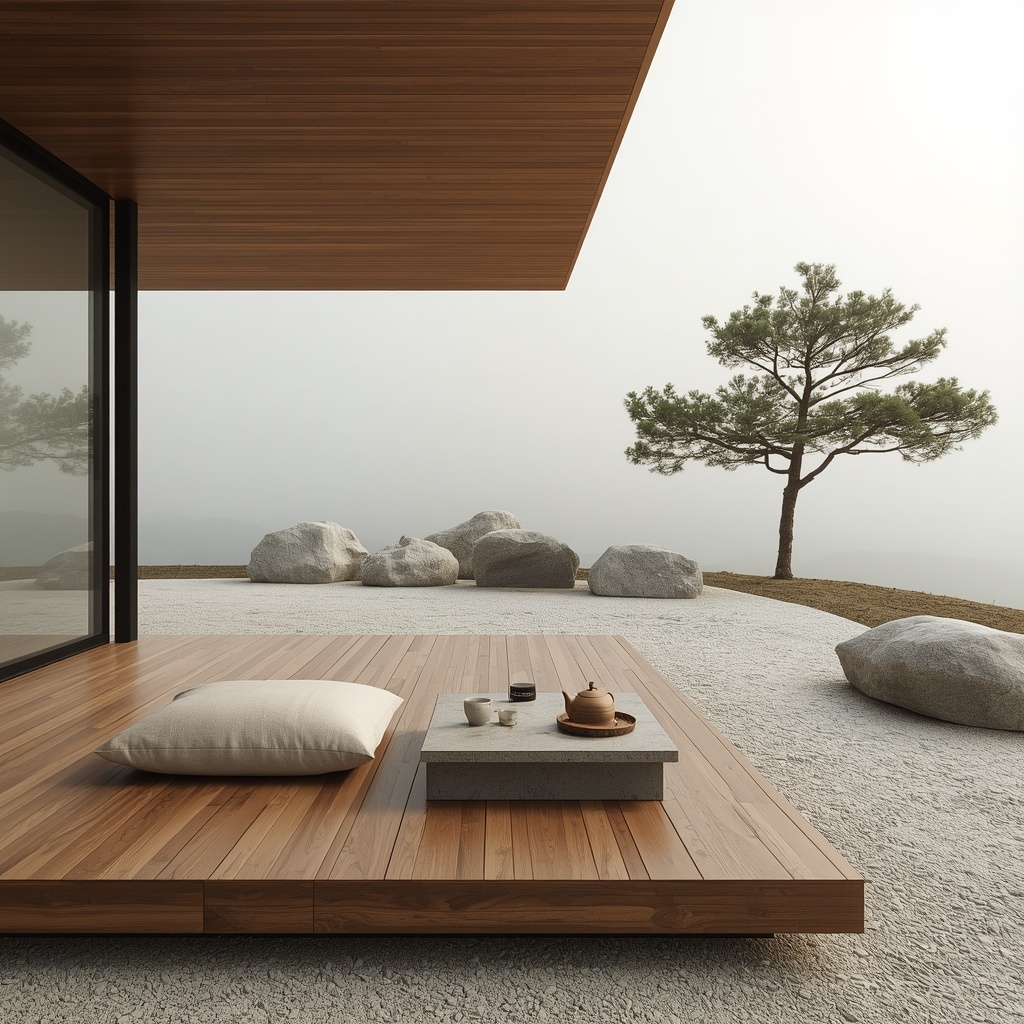
For a modern premium estate, we realize this heritage through a low-profile, floating outdoor platform deck crafted from deep, slow-aged premium teak or charred cedar timber. By dropping the deck frame closer to the soil and extending it directly beneath a sleek, minimalist roof overhang, you create an intermediate visual horizon. This space is neither fully indoors nor fully outdoors—it is an architectural sanctuary of transition.
Instead of bulky, mass-market patio chairs, style this floating deck with minimalist, weather-resistant beige floor cushions and a singular, low-set solid wood table, mirroring the linear geometry of our Master Bed Frame Design. Sitting close to the wood while looking out onto your estate induces an immediate reduction in cognitive fatigue, transforming your porch into an expansive viewing platform of absolute quietness.
2. Borrowed Scenery: Designing the Living Painting via Framing
In the vocabulary of high-end Korean landscaping, we do not build artificial waterfalls or install manicured, unnatural lawn patterns. Instead, we practice the art of Chak-kyeong—literally meaning “borrowing scenery from nature.” The garden is not a separate entity to be looked at; it is a living painting framed by the architecture of the terrace itself.
The modern MARU standard dictates that your outdoor terrace view must be strictly curated through intentional structural voids. Utilize vertical columns crafted from dark structural oak and dark-anodized aluminum frames to slice the landscape into distinct, artistic perspectives. Your view should not expose everything at once; it should intentionally isolate a singular, magnificent ancient pine tree or a collection of raw, moss-covered river stones.
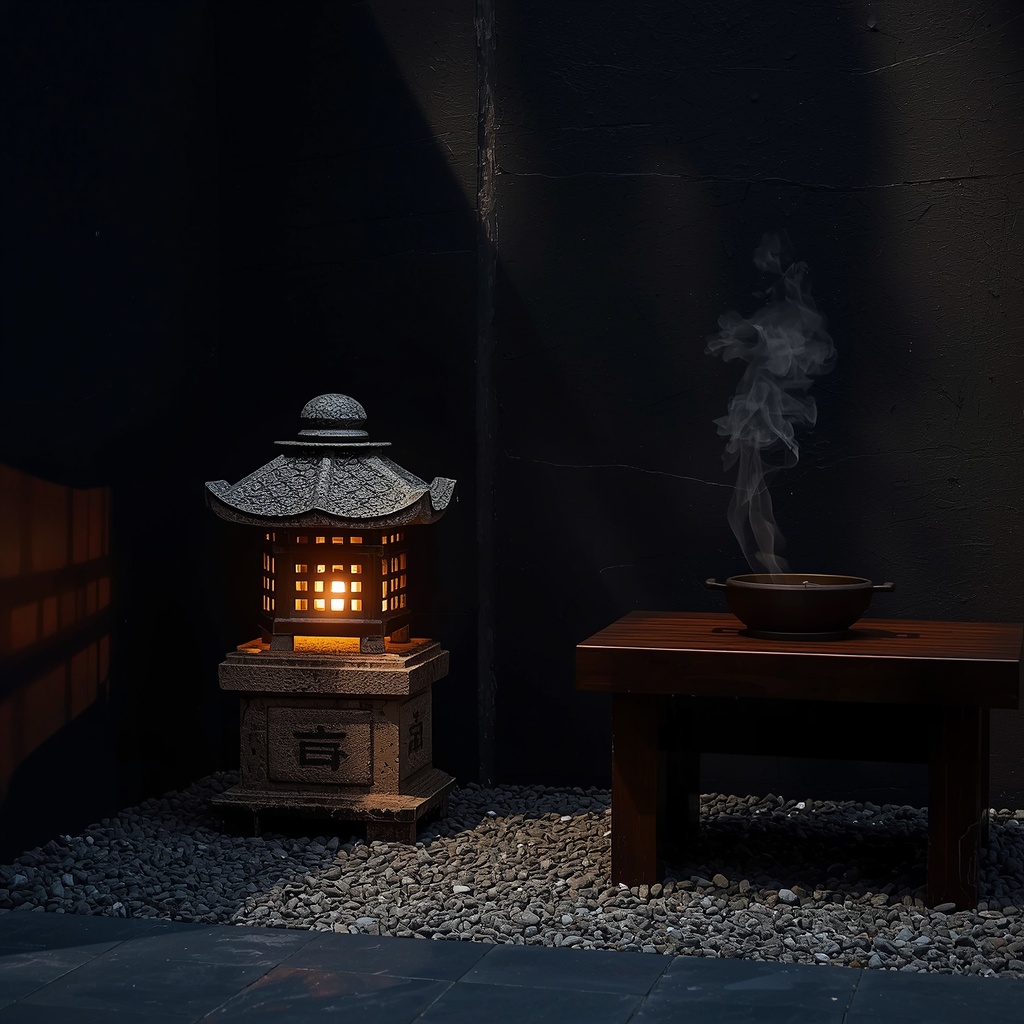
This disciplined isolation forces the eye to rest and meditate on the subtle movement of the wind through the leaves. On a focal point of your gravel walkway, placing an Elegant Outdoor Seokdeung (Stone Lantern) creates a profound visual anchor that bridges the centuries. It brings the museum-quality stillness we cherish in our Modern Hanok Dining Pavilion out into the nocturnal elements of your yard.
3. The Atmosphere of Shadow: Low-Level Light Horizons for the Night
Outdoor lighting in elite American properties is notoriously over-engineered—blinded by intense spotlighting that erases the mystery of the night. True K-Zen landscaping utilizes lighting not to expose, but to deepen the shadows. We call this the curation of Scented Stillness.
By concealing warm, high-CRI, low-voltage LED bars underneath the lip of the floating Toet-maru deck frame, you create an ethereal, horizontal wash of light across the raw slate or gravel below. The entire wood pavilion appears suspended, floating on a sea of amber illumination. For vertical surfaces, light should never strike a wall directly; instead, project a soft path of light upwards from hidden ground wells to catch the coarse, fibrous textures of a stone feature wall or the soft silhouette of bamboo branches.
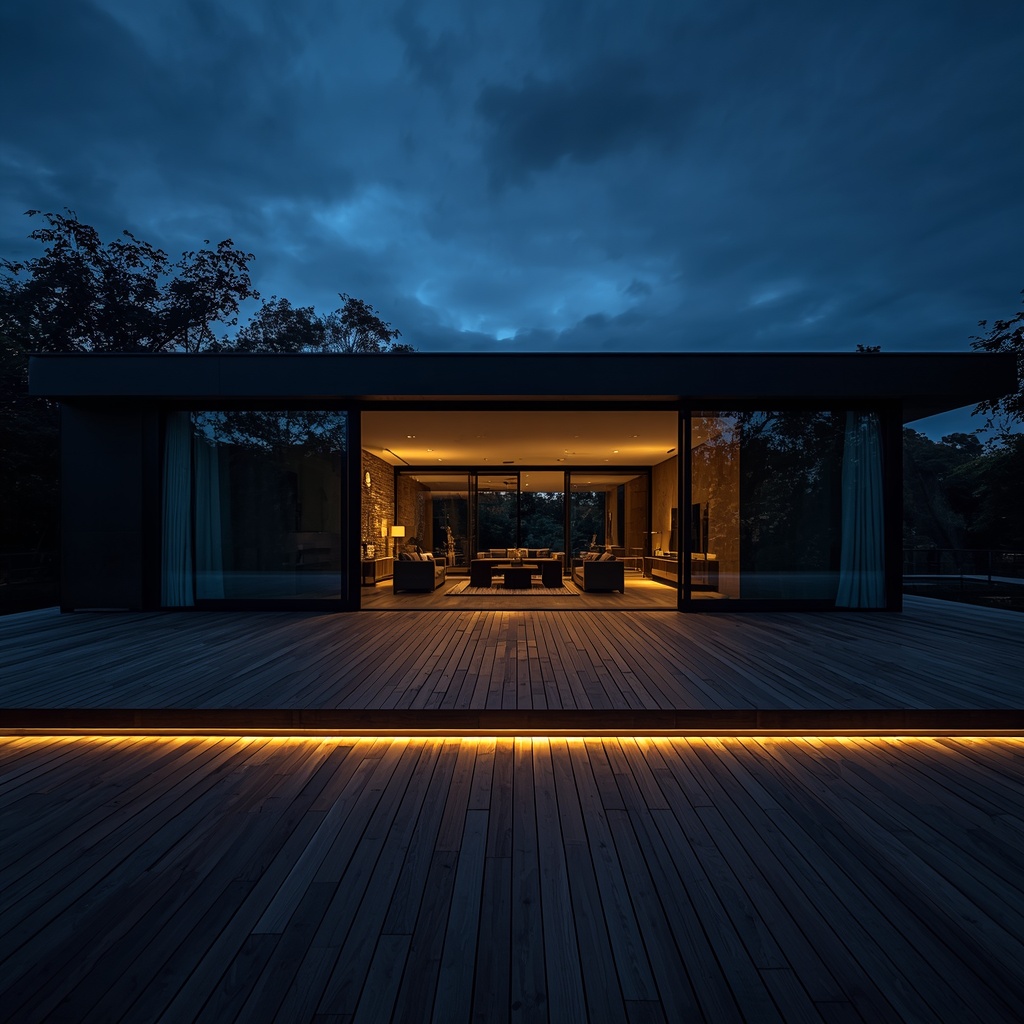
This intentional reliance on low-set lighting reduces sensory stimulation, allowing your eyes to adjust naturally to the deep blue hour of twilight. It perfectly complements the sensory decompression path we built within the Modern Luxury Spa Bath. It transforms your terrace into a profound decompression chamber where you can sit into the late hours of the midnight, enveloped by the absolute peace of the dark.
4. Curating the Teascape: The MARU Evening Outdoor Ritual
How you engage with your outdoor platform at night is the final metric of your curatorial discipline. The modern terrace is usually a hub of loud audio speakers and bright screens. MARU demands a complete sensory reset through a curated tea or incense ritual close to the earth.
As the sun dips beneath the horizon, place a hand-carved wooden tray or a heritage Minimalist Soban onto the low teak deck. Light a singular stick of natural sandalwood inside a Bespoke Stone Incense Burner. Watch as the wind slowly pulls the wisp of white smoke across the deck, tracing the path of the breeze. Pour a warm cup of herbal infusion from your Modern Tea Corner Selection.
This meticulous orchestration of material textures—the cold ancient stone of the lantern, the warmth of the teak wood, and the rising incense—creates an untouchable ecosystem of restorative peace. It ensures your estate does not merely look luxurious from the outside, but acts as a living, breathing cathedral for the soul, mirroring the design absolute found in a grand Contemporary Hanok Estate.
Conclusion: Expanding the Mind by Lowering the Wall
In the frantic velocity of modern global industry, the ultimate luxury is not more space—it is more silence. A bespoke outdoor terrace engineered with traditional Korean design principles provides the ultimate architectural escape velocity.
By extending the intermediate horizon of the Toet-maru, borrowing the deep scenery of the landscape, and mastering the low-level shadows, you transform your yard from a loud showcase of raw capital into an elite sanctuary of deep emotional restoration. It is a nightly architectural reminder that true power does not build higher walls—it simply lowers the perspective to let the soul expand into the infinite.
Would you dismantle your high-set stone patio for a grounded, floating wooden Toet-maru terrace that breathes with nature? Let’s curate your outdoor sanctuary together in the comments below.
Leave a Reply