Introduction: The Architecture of Material Honesty
If you have already engineered a magnificent transition between nature and luxury with our Open Sanctuary Terrace Guide and curated the ultimate culinary pavilion in the Modern Hanok Dining Room, you are ready to address the emotional core of the home: the formal living room. In contemporary American interior design, luxury lounges frequently default to a repetitive pattern of high-gloss lacquer, sterile marble slabs, and massive mass-manufactured entertainment consoles. While these investments project geometric precision and sharp corporate wealth, they often lack a crucial dimension of high-end real estate: historical weight, individual provenance, and material honesty.
Today, MARU introduces a profound structural anchor for the global elite. We present the curation of the Antique Korean Bandaji (Traditional Blanket Chest)—a masterclass in structural strength, heavy material contrast, and quiet heritage. Join 520+ discerning global readers who are dismantling the monotony of industrial furniture to introduce museum-quality anchors that command respect through absolute silence.
1. The Heavy Anchor: Balancing Linear Minimalism with Heritage Form
The primary structural trap of modern interior design is visual weightlessness. When every piece of furniture utilizes thin metal legs, glass surfaces, and floating geometries, the living space can feel ungrounded, causing subconscious cognitive restlessness. To achieve true K-Zen Minimalism, a room requires a singular, unyielding gravitas—a structural anchor that centers the layout.
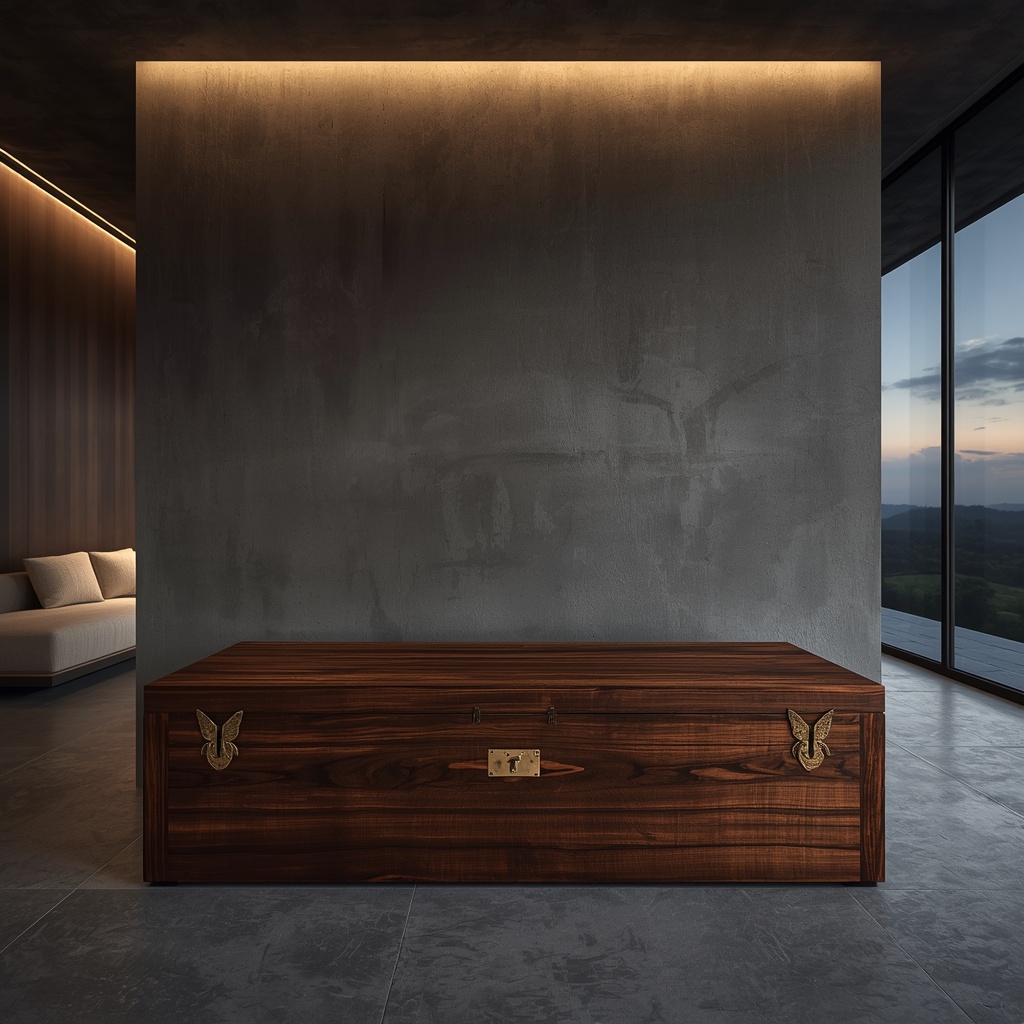
For an elite contemporary penthouse, we realize this balance by placing an authentic, masterfully crafted Bandaji chest against a minimalist, raw concrete or neutral plastered feature wall. The Bandaji is a solid, architectural monolith. Crafted from thick, slow-aged elm or pear wood, its low-slung, boxy profile communicates a sense of permanence and security that commercial furniture can never replicate.
By pairing this heavy wooden chest with a sleek, low-profile off-white linen sectional sofa, you create a sophisticated dialogue between soft modernity and historic rigidity. The linear simplicity of the contemporary sofa provides a quiet background that allows the powerful silhouette of the antique chest to command the room, mirroring the intentional anchoring effect of the floating desk in our Scholar’s Sanctuary Study.
2. The Dialogue of Textures: Hand-Forged Ironworks and Matte Finishes
True refinement whispers through the complexity of its details. What elevates an authentic Korean Bandaji to a museum-quality masterpiece is its complex ironworks (Changsuk). Unlike Western antique furniture that conceals joints and hinges, the Bandaji proudly displays its skeleton through extensive, decorative plates of hand-hammered iron or satin brass.
These brass fittings—frequently cut into symbolic butterfly or geometric shapes—serve as a beautiful tactile contrast against the deep, weather-worn grains of the natural wood. In a high-end interior, this combination provides an incredible layered texture that breaks the sterile monotony of modern drywall.
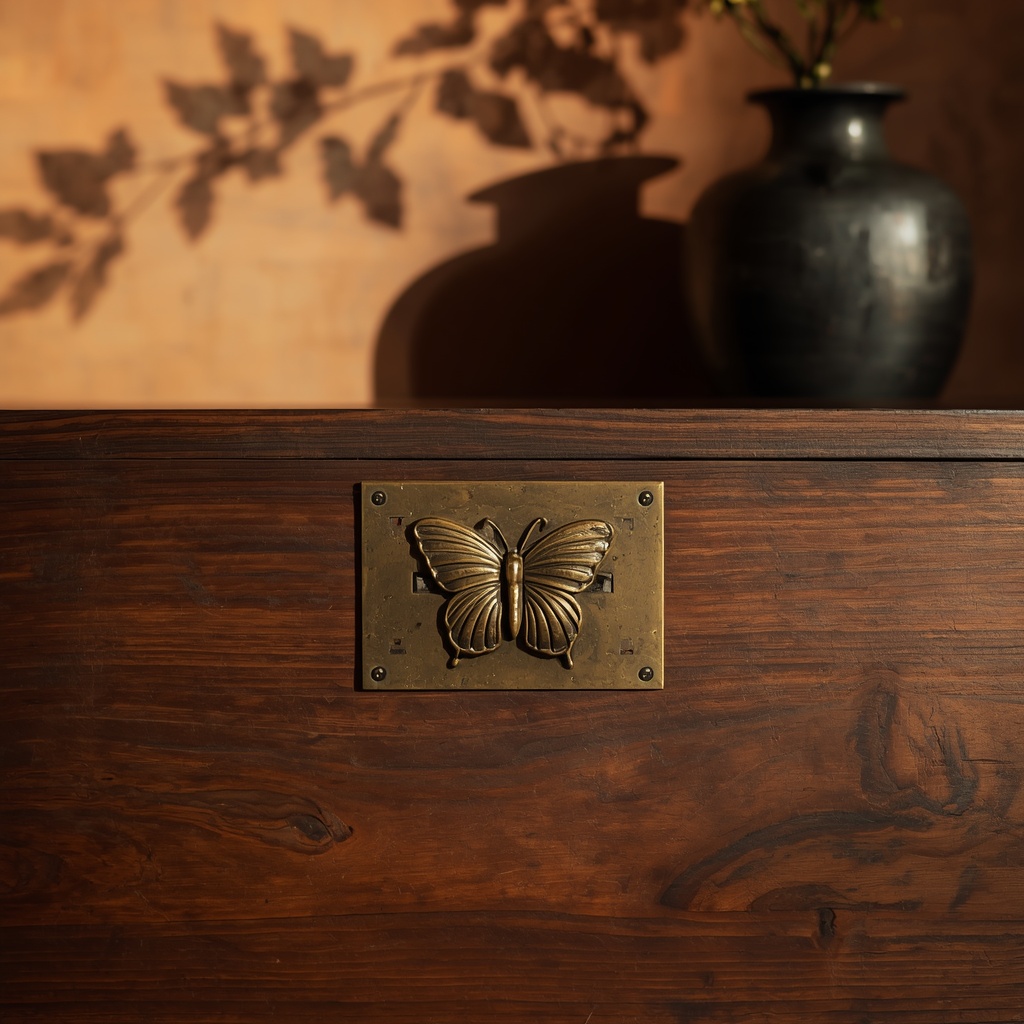
To capture the true MARU standard of styling, place a single pale white porcelain vessel from our Elegant Ceramic Masterclass or an exquisite Bespoke Moon Jar directly on top of the chest’s raw wooden surface. The cold, fluid curves of the glazed ceramic resting beside the rigid, geometric brass hardware create a stunning visual cadence. This sophisticated juxtaposition ensures your formal lounge feels curated over lifetimes, avoiding the artificial look of a showroom floor.
3. The Shadow Horizon: Illuminating the Artifact for Nocturnal Majesty
Lighting an antique artifact within a luxury lounge requires extreme restraint. Direct, aggressive spotlighting from overhead ceiling tracks flattens the texture of the wood and creates harsh, cheap glares on the hand-forged metal plates. We must look to the light play established in our Master Bedroom Horizon Guide, where light is indirect and low-set.
Conceal a warm, high-CRI linear LED strip or a low-set architectural light well directly beneath or behind the low base of the Bandaji chest. When turned on in the evening, the light grazes upward, beautifully catching the intricate, hand-hammered relief of the brass butterflies and casting rhythmic, dramatic shadows onto a hand-textured Hanji Wallpaper Wall behind it.
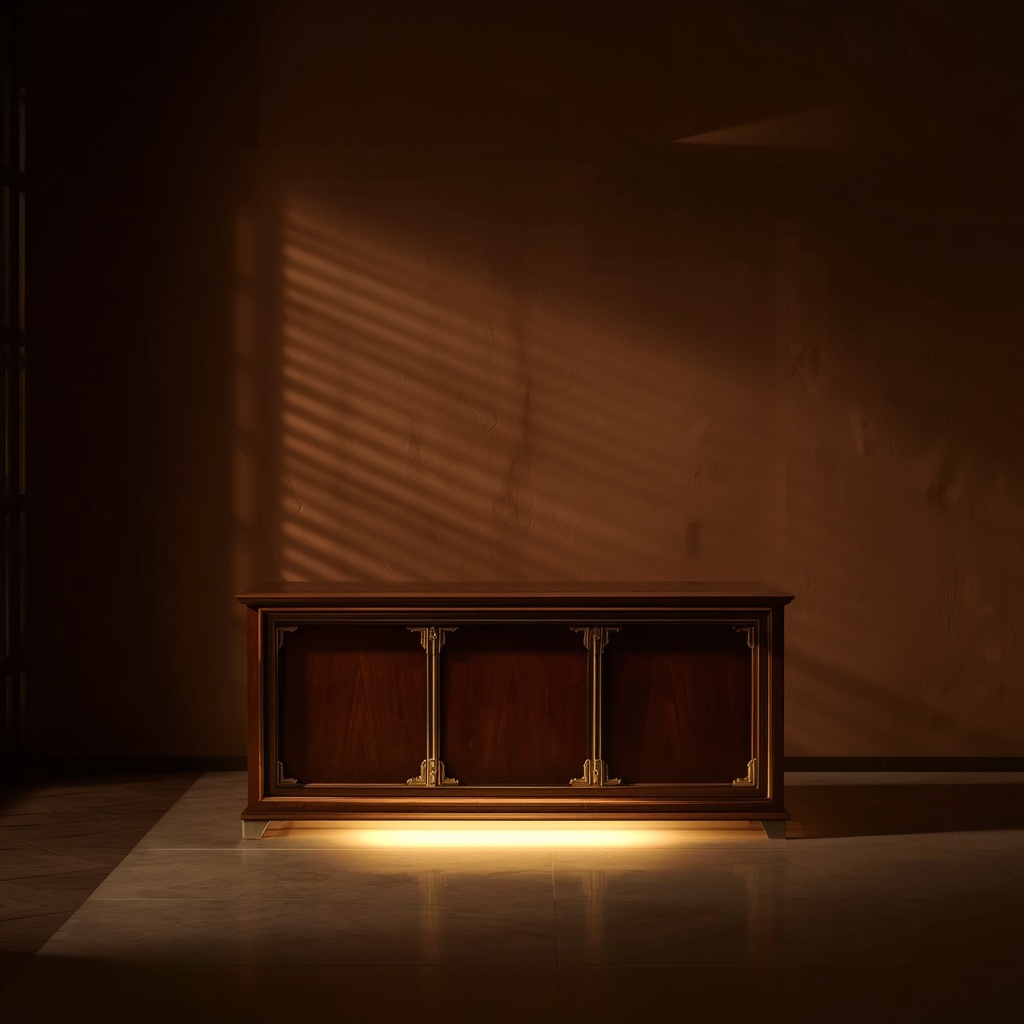
This intentional manipulation of shadow isolates the chest, making it appear as a floating historical monument within the darkness. It naturally drops the heart rate of your evening guests, transforming a social living space into a meditative gallery of slow-living—a atmosphere of decompression we also cherish in our Modern K-Zen Spa Sanctuary.
4. Curating the Perimeter: The MARU Standard of Visual Restraint
The final metric of styling a high-end space with heritage furniture is honoring the philosophy of Yeo-baek (Empty Space) around the artifact. A common error in luxury estates is surrounding an antique piece with lesser decorative items, which suffocates its presence and turns a masterpiece into mere clutter.
The MARU standard demands that the perimeter around your Bandaji remain completely liberated. Do not flank it with commercial floor lamps or modern sound systems. Let the chest stand alone as a sculptural monument on a hand-knotted wool rug. If you must add elements, pair it with a single Bespoke Stone Incense Burner on a low wooden plinth, allowing a thin wisp of sandalwood smoke to drift across the metalwork before your guests arrive.
By engineering this intentional isolation, you allow the history, the wood grain, and the soul of the craftsmanship to occupy the entire room. It bridges the gap between modern architectural scale and heritage precision, creating an environment that feels profoundly grounded, mirroring the spatial balance of a grand Contemporary Hanok Estate.
Conclusion: Crafting Legacy via Historic Silence
In the rapid momentum of modern real estate development, true luxury has evolved from a matter of square footage to a matter of historic narrative. An antique Korean Bandaji is not merely a storage chest; it is an architectural statement of material truth and historical stillness.
By anchoring your living room with its massive form, embracing the complex dialogue of brass and elm, and commanding the evening shadows, you transform your home from a loud display of wealth into a profound temple of heritage. It is a daily visual reminder that the ultimate power does not chase trends—it stands unmoved, commanding respect through absolute silence.
Would you dismantle your high-gloss modern media console for a grounded, hand-forged antique Bandaji chest that tells a story of centuries? Let’s curate your formal lounge together in the comments below.
Leave a Reply