Introduction: The Architecture of Decompression
If you have already anchored the core of your estate with the timeless presence of our Timeless Grandeur Bandaji Guide and established deep conversational clarity within the Modern Hanok Dining Room, you are ready to conquer the most private domain of high-end real estate: the master bathroom. In contemporary Western architectural design, luxury bathrooms are frequently treated as loud shrines of sterile industrial wealth—dominated by high-gloss polished marble, glittering brass fixtures, and blinding overhead white LEDs. While these multi-million dollar spaces project immediate financial dominance, they often fail to deliver what the modern global leader truly requires at the end of a high-stakes corporate day: a complete sensory reset, emotional insulation, and spatial decompression.
Today, MARU redefines the architecture of self-care. We introduce the design philosophy of the modern K-Zen Spa Bath—a private sanctuary grounded in the ancient Korean principles of Yeo-baek (The Art of Empty Space) and organic tactility. Join 530+ discerning global readers who are dismantling corporate coldness to lower their baseline stress, transforming a functional daily routine into a profound meditative ceremony.
1. The Grounded Monolith: The Low-Profile Organic Stone Tub
The foundational structural flaw of standard contemporary bathrooms is the reliance on glossy, synthetic acrylic or porcelain freestanding tubs that float awkwardly in the center of the room. True K-Zen Minimalism dictates that the elements of water must feel deeply anchored to the earth, echoing the structural honesty of the low-profile lifestyle found in traditional Korean architecture.
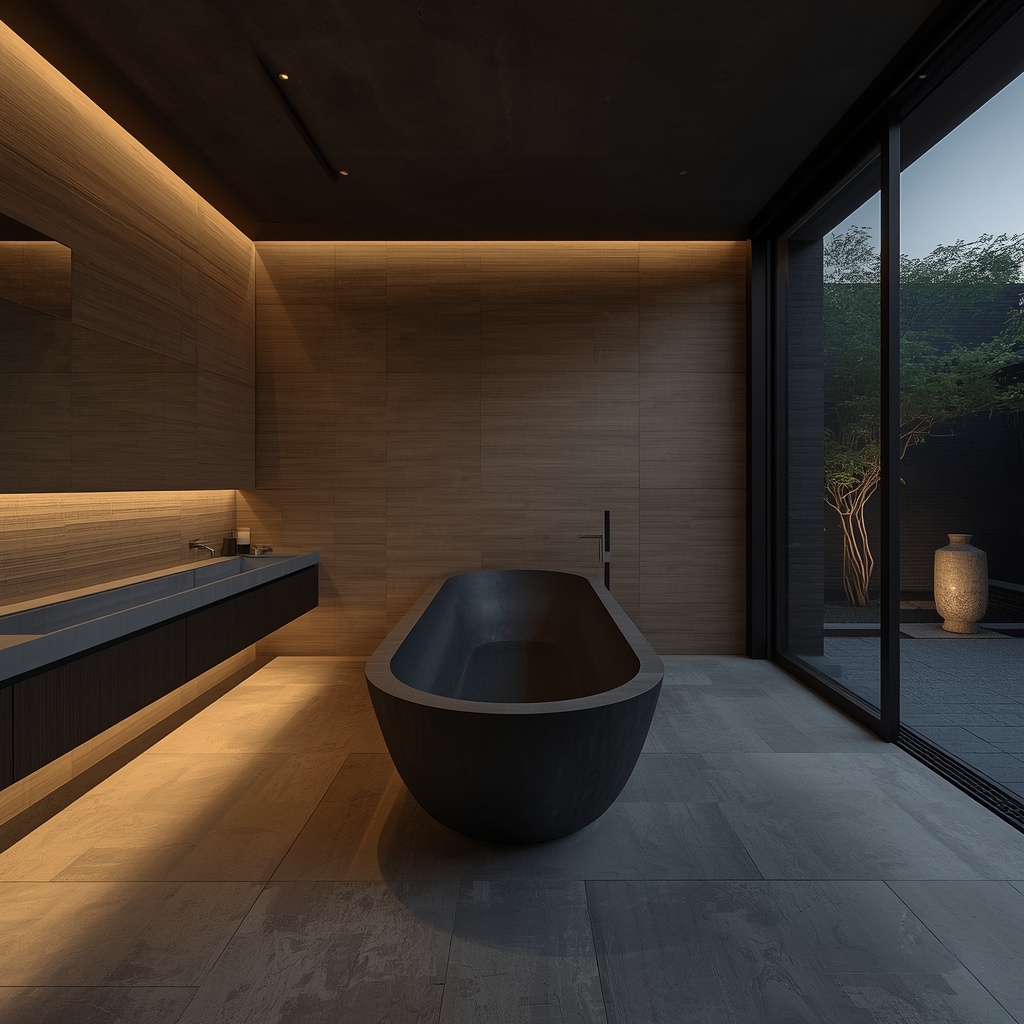
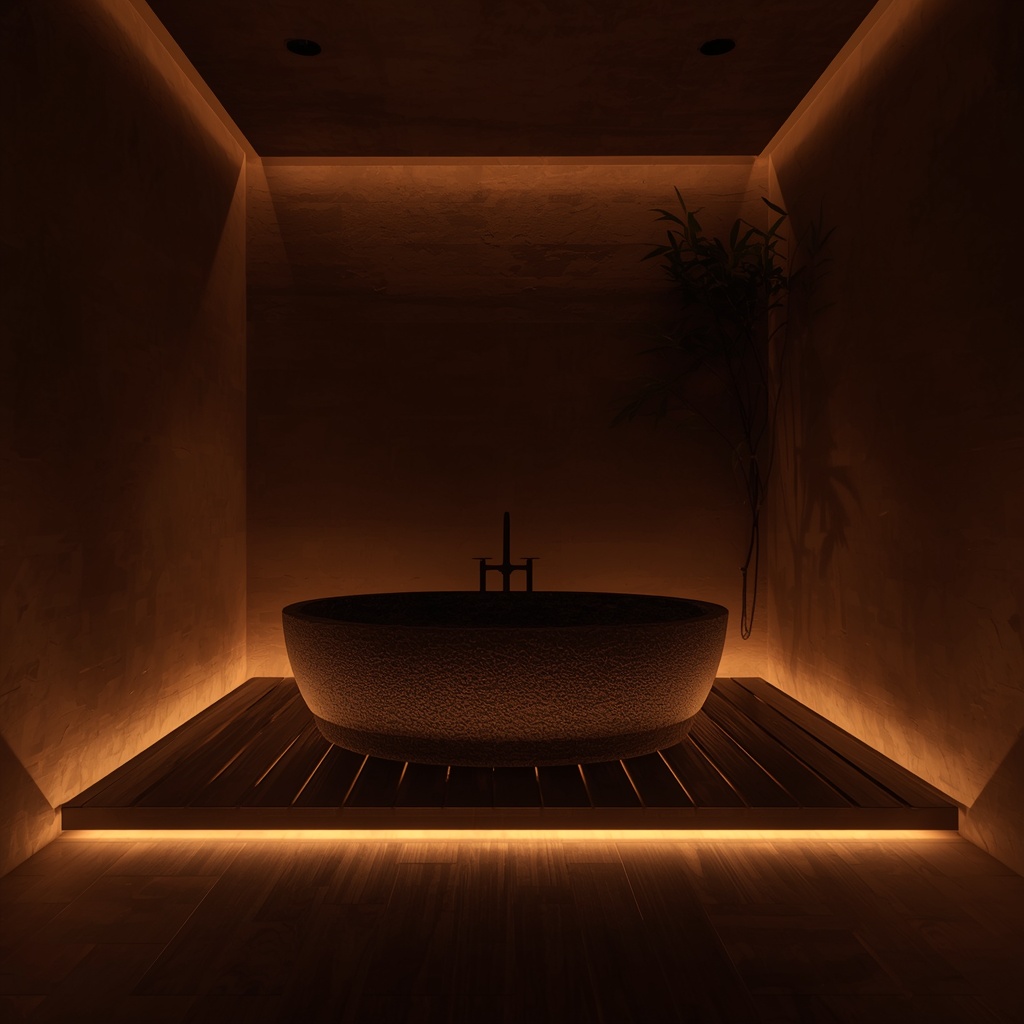
For an elite master suite, we interpret this heritage through a custom-built, low-profile soaking tub carved entirely from a single monolith of dark, matte volcanic stone or unpolished granite. By dropping the tub baseline close to the floor or recessing it slightly into a premium teak frame, you physically lower your visual plane during the ritual of bathing.
The heavy, textured stone provides an immediate sense of raw permanence and security. It retains natural heat, interacting with the steam to create an ancient, grounding tactile experience. This intentional reduction in furniture height liberates the space above, creating a vast volume of visual silence that relaxes the cognitive load—the exact same spatial logic we implemented in our Restful Elegance Master Bedroom.
2. Structural Tactility: The Warmth of Breathing Hanji and Clay Finishes
A high-end sanctuary of rest cannot exist surrounded by cold, non-porous surfaces that collect condensation and reflect harsh echo. To neutralize the acoustic and visual noise of contemporary glass and steel, we introduce the rule of organic structural tactility.
Instead of tiling every vertical plane from floor to ceiling, the modern MARU standard utilizes a sophisticated split-wall architecture. Areas directly exposed to water utilize matte slate or raw river stones, while the dry zones—such as the entry portals and floating vanity walls—are enveloped in hand-textured Breathing Hanji Walls.
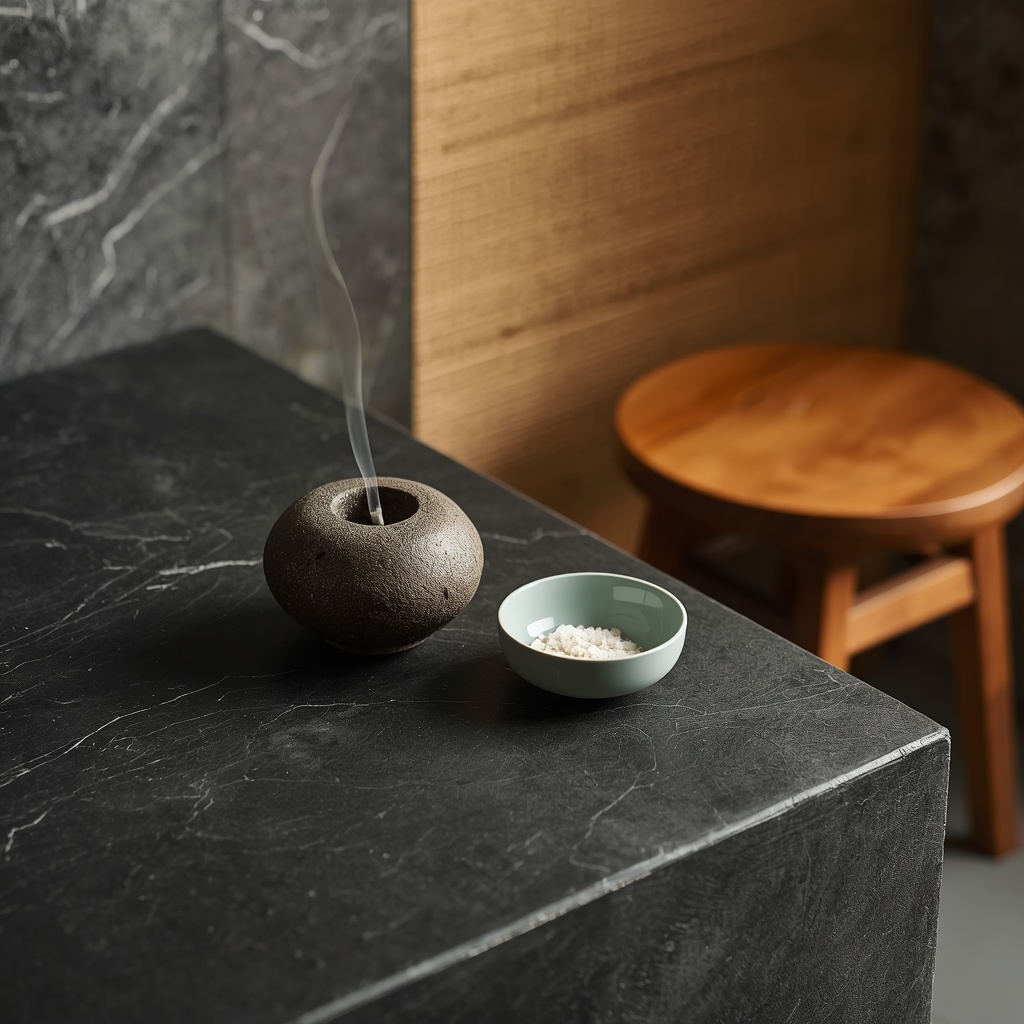
Hanji, crafted from the inner bark of mulberry trees, is naturally breathable, regulating humidity within the room while absorbing ambient sound waves to create a soft, acoustic hush. On a low floating cedar shelf adjacent to the vanity, placing a single pale celadon ceramic dish from our Elegant Korean Ceramics collection introduces a cool, smooth glaze that contrasts beautifully with the raw, fibrous texture of the wallpaper. It transforms a functional hygiene space into a museum-quality private gallery.
3. The Atmosphere of Twilight: Micro-Lighting and Borrowed Scenery
Harsh, direct overhead downlights from commercial fixtures completely destroy the neurological path to decompression. To achieve true emotional insulation, lighting in a luxury spa bath must mimic the filtered, diffused transition of twilight, a concept deeply celebrated in Modern Seoul Style architectural masterworks.
By concealing high-CRI, low-voltage warm LED bars beneath the lip of the floating vanity and under the recessed baseline of the stone tub, you create an ethereal “Shadow Horizon.” The light grazes horizontally across the matte timber or slate floors, keeping the aggressive glare entirely hidden from the reclining eye. This intentional manipulation of shadow mimics the calming atmosphere we designed within the Scholar’s Sanctuary Home Office.
Furthermore, by replacing solid partitions with floor-to-ceiling minimal glass sliding panels, you practice Chak-kyeong (Borrowed Scenery). Your bathing gaze is directed outward into a private, walled courtyard garden. Softly illuminating a singular Outdoor Seokdeung (Stone Lantern) amidst misty bamboo allows nature to act as a living, dynamic backdrop for your midnight decompression, perfectly aligning with the architecture of our grand Modern Hanok Estate Chronicles.
4. Curating the Ritual: The MARU Standard of Olfactory Discipline
The final metric of a high-end spa bath is its olfactory environment. Commercial luxury brands frequently flood a bathroom with synthetic, aggressive perfumes that overstimulate the nervous system. MARU demands a return to raw, elemental aromas that steady the breath and purify the mind.
Keep the vanity surface completely liberated from plastic bottles and cluttered cosmetics. Instead, treat the stone ledge as a minimalist gallery plinth. Place a single Bespoke Stone Incense Burner on one corner. Before entering the low-profile stone tub, ignite a single stick of natural sandalwood or agarwood. Watch as the wisp of white smoke slowly traces the path of the steam, creating a visual metronome that slows your pulse.
By enforcing this intentional isolation, you ensure that every object carries functional weight and spiritual meaning. The master bath ceases to be a mere utility locker for the body; it transforms into a curated temple for the rehabilitation of the soul.
Conclusion: Crafting Decompression Through Structural Truth
In the hyper-accelerated cadence of global industry, the ultimate authority is the ability to command absolute stillness within your own home. A master bathroom designed with Korean Zen principles is not an aesthetic luxury; it is a cognitive necessity for the modern leader.
By anchoring the space with the raw truth of stone, honoring the breathing texture of mulberry walls, and commanding the evening twilight, you create an environment where the mind can truly expand. It is a daily architectural reminder that true power does not roar—it restores itself in absolute silence.
Would you dismantle your high-gloss polished marble executive bath for a grounded, stone-carved sanctuary of deep peace? Let’s curate your private healing environment together in the comments below.
Leave a Reply