Introduction: Decompressing the Executive Mind
I still remember the precise moment I collapsed into the quiet fury of a high-end tea room tucked away in the misty valleys of Mount Jiri. I was running on nothing but espresso, adrenaline, and corporate anxiety, completely burned out by the relentless velocity of the modern world. The moment I crossed that threshold and the scent of raw timber and burning incense hit me, my entire nervous system did something it hadn’t done in years: it paused. It wasn’t just a physical room; it was an active intervention against noise.
In contemporary Western luxury design, we are conditioned to build loud, cavernous entertainment lounges—flooded with giant glass wine cellars, roaring high-end audio setups, and sterile polished marble bars. While these spaces project immediate financial capacity, they offer absolutely zero refuge for the weary mind. Today, MARU redefines the apex of home sanctuary. We introduce the design framework of the bespoke K-Zen Tea Room—a private, meditative temple where structural truth, the geometry of tea rituals, and raw material honesty converge to slow down time. Join 536+ discerning global leaders who are reclaiming their internal silence.
1. The Low Horizon: Resurrecting the Grounded Comfort of the Toet-maru
The fundamental psychological failure of the modern luxury lounge is its aggressive vertical orientation. Towering bar stools and massive leather armchairs keep your body elevated, maintaining a subconscious posture of high-alert corporate readiness. True K-Zen Minimalism demands that we drastically lower our perspective to reconnect with the grounding weight of the earth.
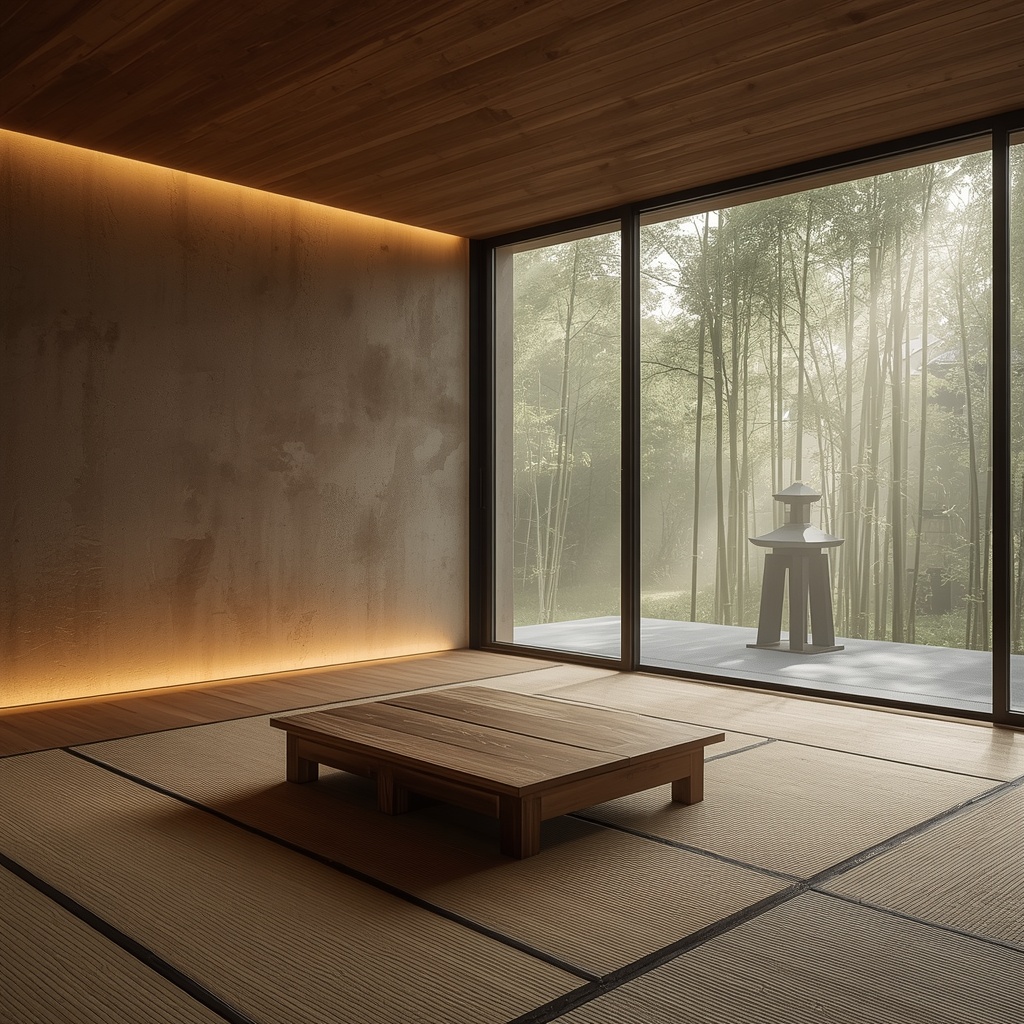
For an elite estate, we build this foundation through a low-profile, floating platform layout inspired by the traditional Korean Toet-maru (veranda). Instead of standard seating, line the floor with premium, tightly woven matte tatami mats or raw, wide-plank oiled elm timber. In the center, place a custom-carved, low-profile long tea table made from a single slab of slow-grown walnut with soft, organic edges.
Sitting close to the timber completely alters your visual scale. Suddenly, the room feels vastly expansive, liberating a monumental volume of Yeo-baek (Empty Space) above your head. This intentional reduction in height instantly drops your baseline heart rate, drawing the exact same lines of cognitive decompression we engineered into our Restful Elegance Master Bed Platform.
2. Tactile Authenticity: The Interplay of Coarse Clay and Buncheong Ceramics
If you surround yourself with sterile, non-porous materials like high-gloss lacquer and synthetic quartz, the air in your sanctuary feels dead, and sounds bounce harshly off the walls. A premium tea pavilion must breathe. It must hold a dialogue with your senses through raw structural tactility.
Envelop the focal walls of your tea suite in hand-applied, coarse clay plaster mixed with fine river sand. This hand-textured finish creates incredibly deep, organic grazing shadows when struck by indirect light, absorbing sound waves to introduce an absolute acoustic hush to the space. Against this rough, matte backdrop, we construct the ultimate tea tablescape by placing a heritage Minimalist Soban Tray Table as the working platform for your brewing vessels.
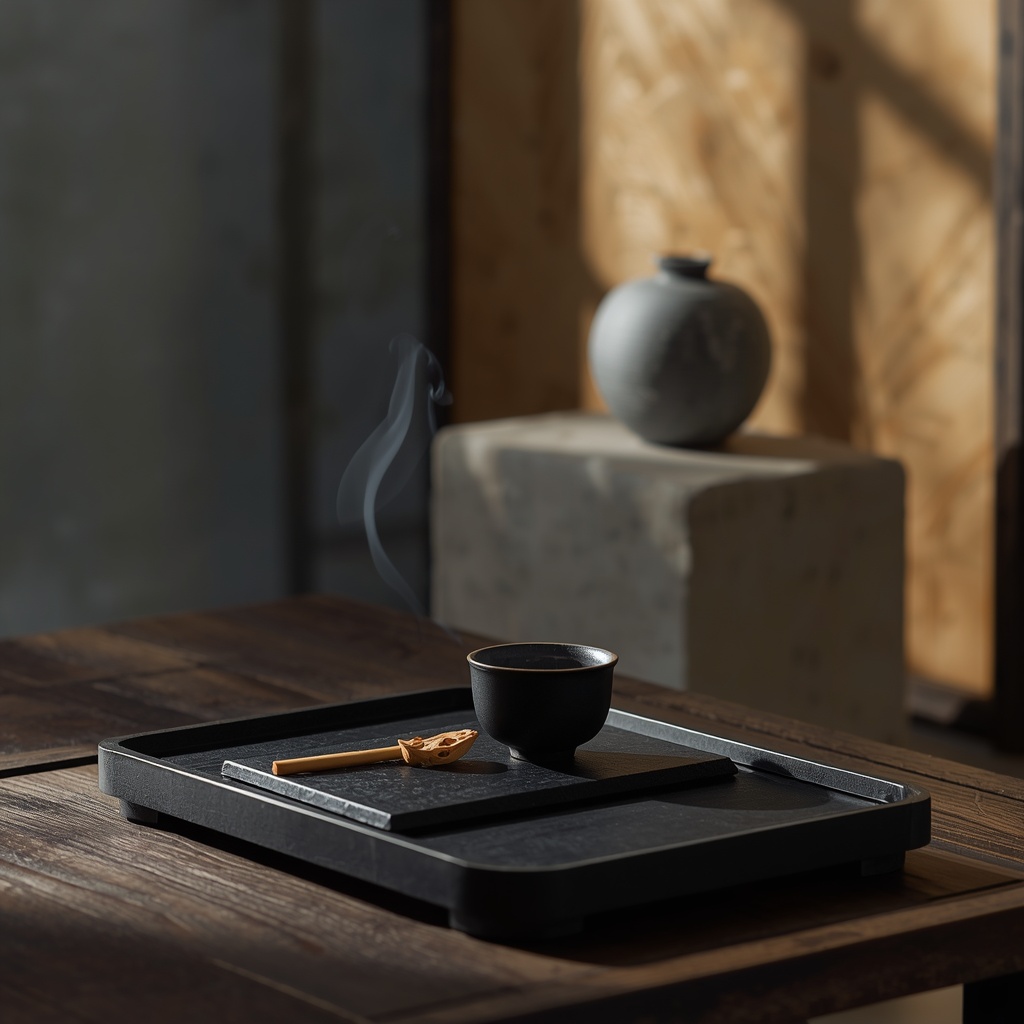
Instead of polished porcelain, select an authentic, coarse-glazed Korean Buncheong or celadon teapot from our Elegant Ceramic Collection. The organic imperfections of the clay body and the deep satin golden luster of nearby Korean Yugi Bronzeware Bowls create a museum-quality visual cadence. It bridges the gap between ancient craftsmanship and 21st-century architectural restraint, echoing the serene focus found in our Modern K-Zen Culinary Kitchen.
3. Borrowed Scenery: Framing the Horizon via Sliding Paneling
A tea sanctuary should never feel claustrophobic or completely cut off from the seasonal shifts of the earth. In traditional Hanok masterworks, this connection is achieved through the architectural genius of Chak-kyeong (Borrowed Scenery)—treating the outdoor landscape as a living, breathing mural framed by the interior portals.
Replace one entire masonry wall with high-end, ultra-minimalist floor-to-ceiling glass sliding screens. These panels must slide completely into pocket pockets, erasing the boundary between the internal timber platform and an outdoor private courtyard garden. Line the immediate view with misty bamboo stalks and place a singular Bespoke Outdoor Seokdeung (Stone Lantern) on fine grey gravel.
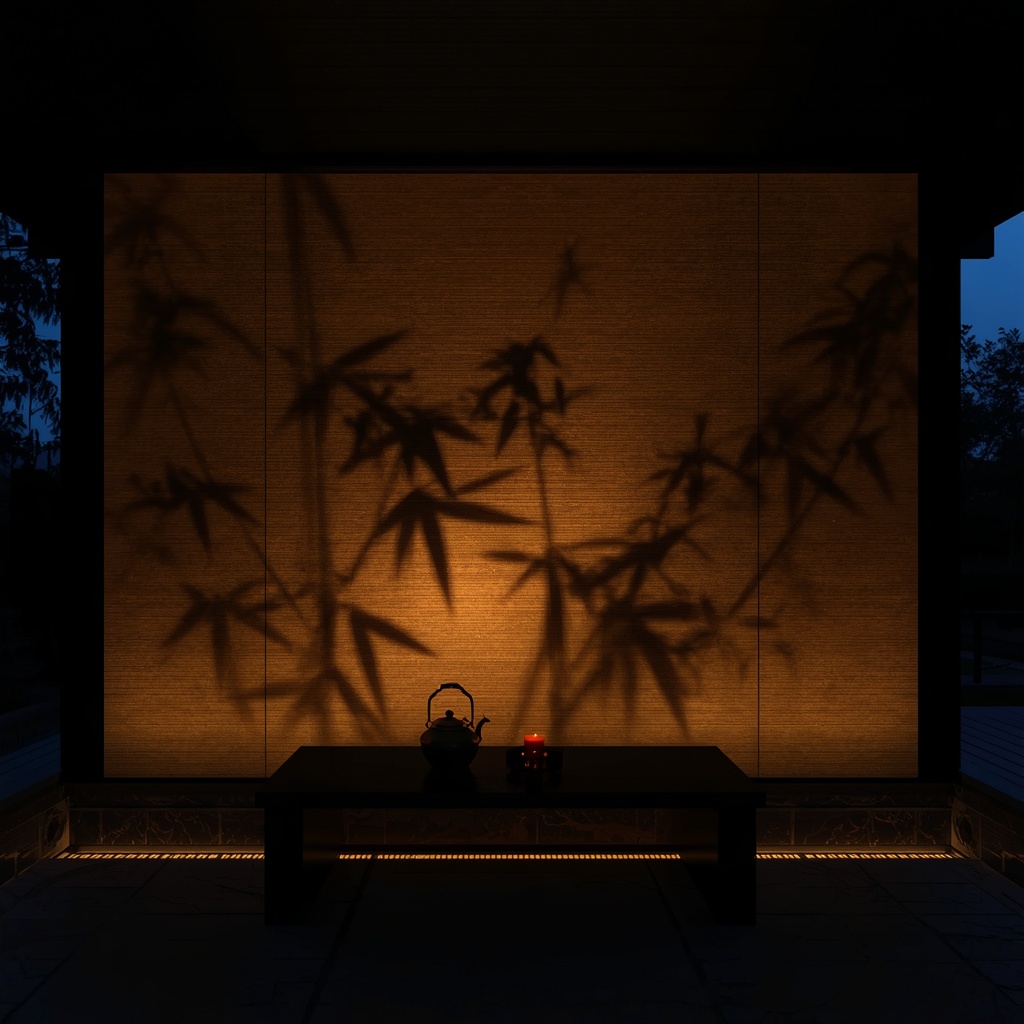
During your late-night tea sessions, turn off all overhead spotlights. Allow only a warm, low-level linear LED light well to glow from beneath the Toet-maru deck, projecting the gentle silhouette of bamboo leaves onto a textured Hanji Paper Screen. This low-set lighting environment naturally coaxes your brain into a state of deep, restorative slow-living—a therapeutic visual path we masterfully applied to our Luxury K-Zen Spa Sanctuary.
4. The Olfactory Discipline: Enforcing Visual and Sensory Restraint
The final, and most strict, discipline of maintaining an elite tea room is the absolute elimination of visual clutter. High-end spaces are routinely ruined by wires, modern plastic tea kettles, and chaotic storage boxes that overstimulate the optic nerve.
The MARU standard demands that the perimeter remains completely liberated. All mechanical boiling hardware must be hidden within low-profile flush cabinetry. The surface of your walnut table should remain completely empty, save for your brewing set and a single Bespoke Stone Incense Burner resting on one corner. Before your guests arrive, ignite a single stick of natural sandalwood, watching the thin wisp of white smoke slowly drift across the wood grains.
This intentional vacuum ensures that the focus remains entirely on the texture of the clay, the warmth of the tea liquor, and the souls of the people gathered around the table. It elevates a simple hot drink into an unforgettable, high-end sensory ritual, matching the architectural absolute found in a grand Contemporary Hanok Estate Stay.
Conclusion: Reclaiming Sovereignty over Your Time
In the frantic, hyper-accelerated cadence of modern global industry, the ultimate power is no longer financial leverage—it is the absolute command over your own attention and time. A private tea sanctuary built on modern Hanok principles is a sophisticated psychological tool designed to deliver that exact sovereignty.
By lowering your horizon to the earth, honoring the rough honesty of clay, and borrowing the calm scenery of the bamboo elements, you create a space where the mind can finally expand into the infinite. It is a daily architectural testament that the greatest wealth does not shout—it sits down, lights a stick of incense, and finds perfection in a single cup of tea.
Would you dismantle your loud, industrial home bar for a grounded, timber-framed K-zen tea room designed for absolute cognitive restoration? Let’s curate your private temple together in the comments below.
Leave a Reply